Advanced tools & research
FEASTS & APPOINTED TIMES
The Appointed Times in Sacred Context
Answer what it is, when it occurs, what Scripture says, and how this calendar model places it.THE FEAST & SACRED-TIME COLLECTION
Remember. Discover. Connect.
Twenty-three illustrated cards connect the appointed times with Scripture, Jubilees, the Temple Scroll and other relevant witnesses.
Helpful Saints affirms the Essene/Zadok calendar as the true calendar.
Explore all 23 cards ↓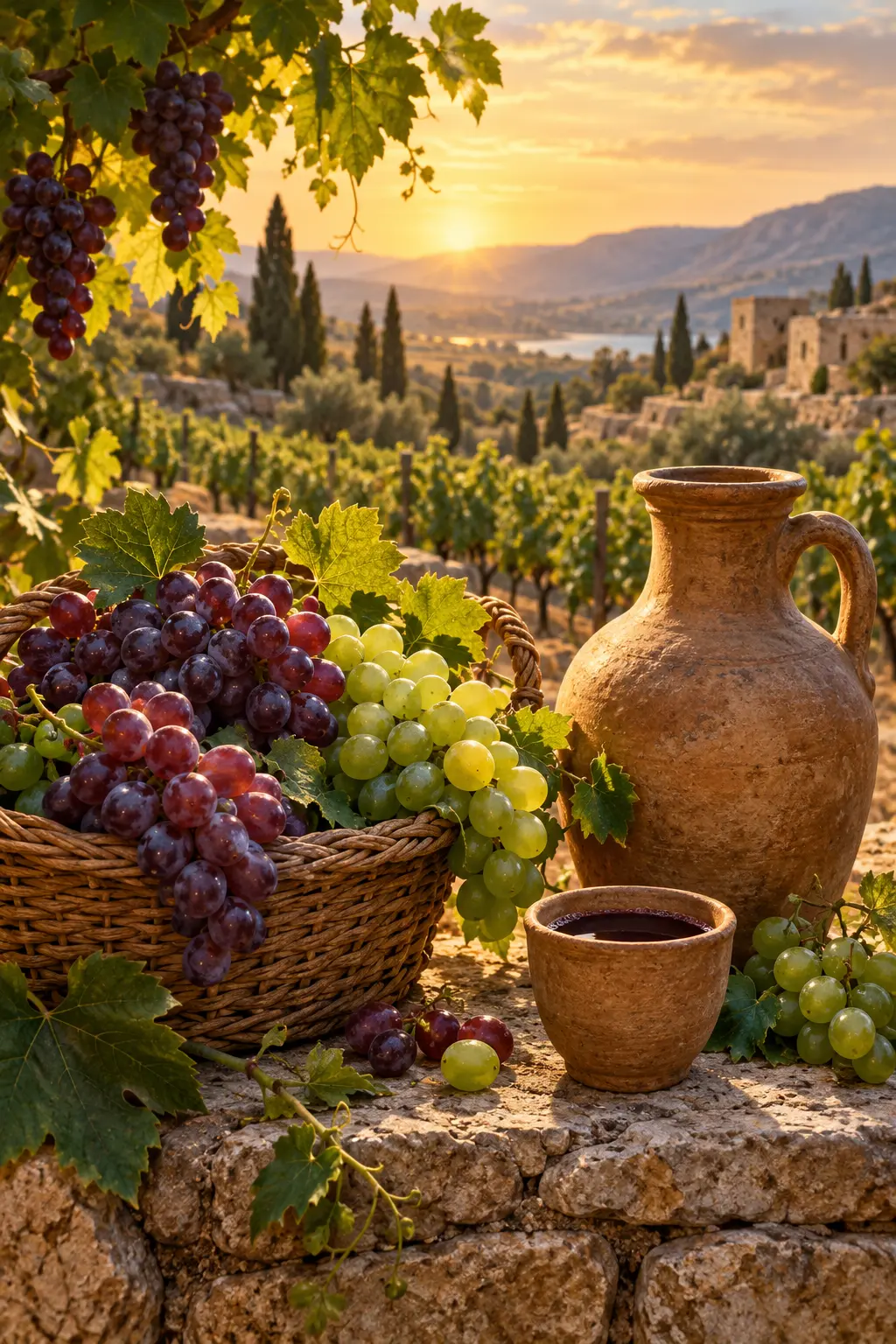
Scroll connections
Firstfruits of New Wine
The vineyard’s first gift
Grapes grow through a season of care. This card explores giving thanks for the first produce of the vineyard.
Look, read, wonder. Find one detail in the picture, read a passage with a grown-up, and ask one question. Pictures include imagined details.
Grapes grow through a season of care. This card explores giving thanks for the first produce of the vineyard.
- Notice three details in the illustration.
- Let a caregiver choose and read a source passage.
- Find one detail stated in the text and one imagined by the artist.
- Talk about the question below.
The Temple Scroll sets a New Wine firstfruits festival after the wheat count. Torah first-produce passages provide a related background, while the scroll supplies the distinct festival sequence.
Begin with a cited passage, compare its connected witness, then inspect the dates and record a supported observation.
The Temple Scroll sets a New Wine firstfruits festival after the wheat count. Torah first-produce passages provide a related background, while the scroll supplies the distinct festival sequence.
Keep the witnesses distinct. Identify the edition and locator, inspect restored wording, and separate an ancient appointment from its modern civil conversion.
A question worth followingWhere does the evidence move from a general first-produce instruction to a specifically dated wine festival?
What to keep in view
The primary model places this festival on 3 of month V. A separate fixed Rabbinic holiday on that date is not invented. Restored words in the composite scroll edition remain identified.
KEEP THE CALENDARS CLEAR
When is it?
Helpful Saints affirms the Essene/Zadok calendar as the true calendar.
Checking the primary calendar…
The primary civil mapping uses Helpful Saints’ existing native calendar engine. Its AM chronology, civil anchor and leap-week schedule are published reconstruction choices. Later commemorations are clearly labeled when mapped onto it.
READ THE WITNESSES
Passages, scrolls & connected texts
These are selected source notes and links. Read each edition for its wording; the notes do not replace a full text.
Deuteronomy 18:4
Deuteronomy 18:4Wine is among the first produce given to the priests; this verse does not establish the scroll’s festival date.
King James VersionTemple Scroll / 11Q19
11Q19 XIX 11 onward; XXI 4–10The scroll’s wine festival follows the wheat count.
Qimron composite text as presented by Marvin A. Sweeney (2018); bracketed words are restorationsFOLLOW THE THREAD
Connected feast studies
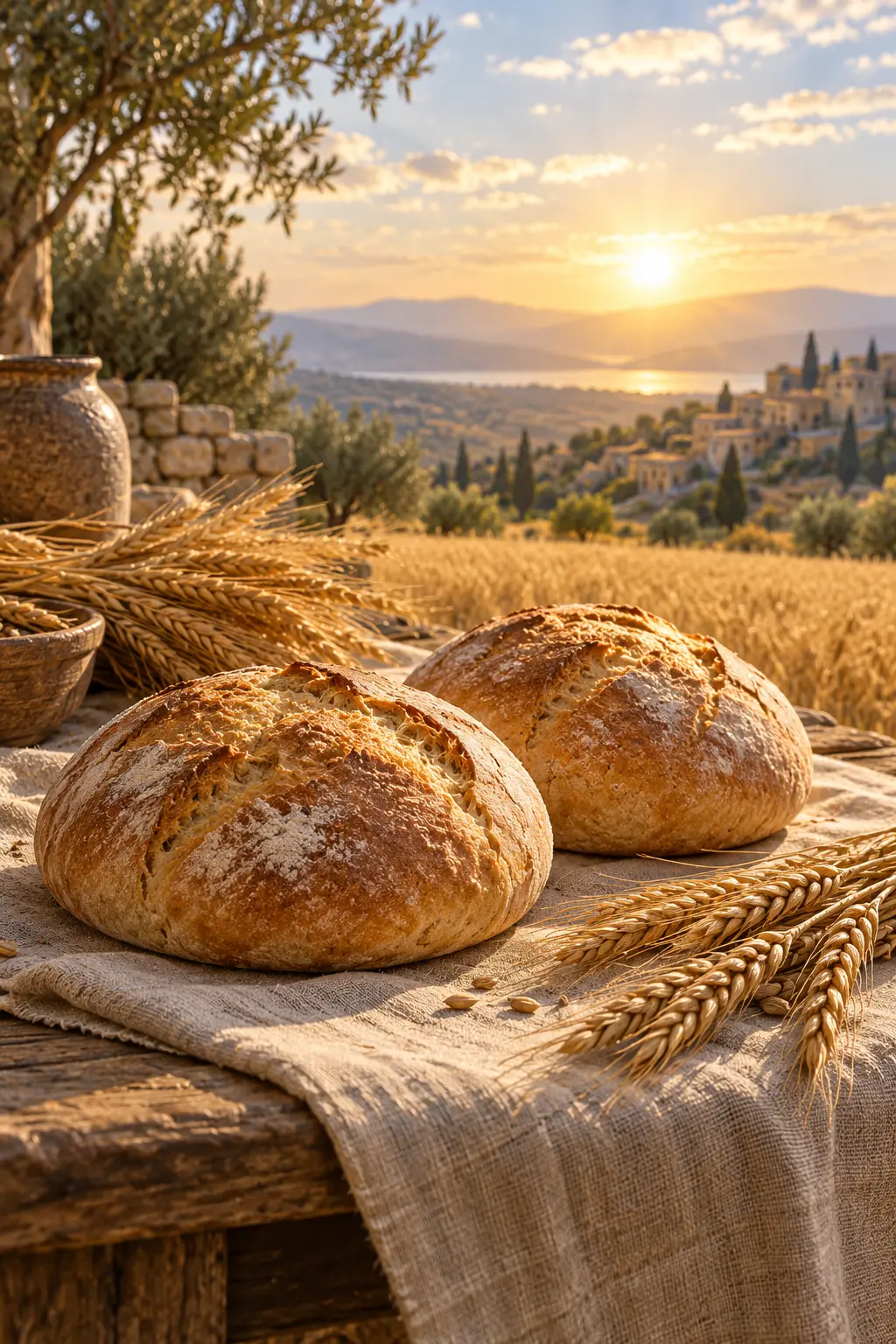 Weeks / Firstfruits of WheatCounting toward a shared harvest
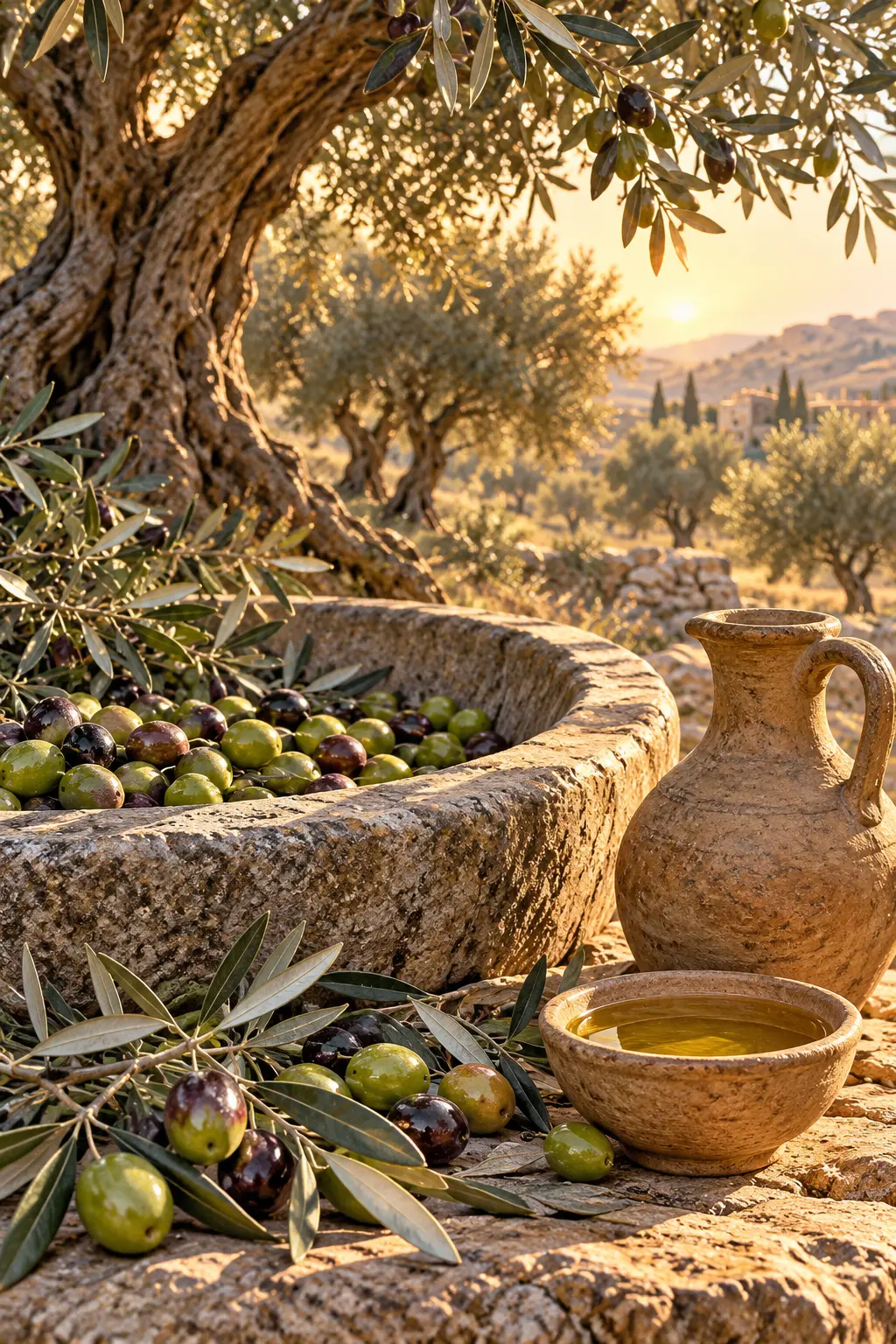 Firstfruits of New OilThe olive harvest remembered
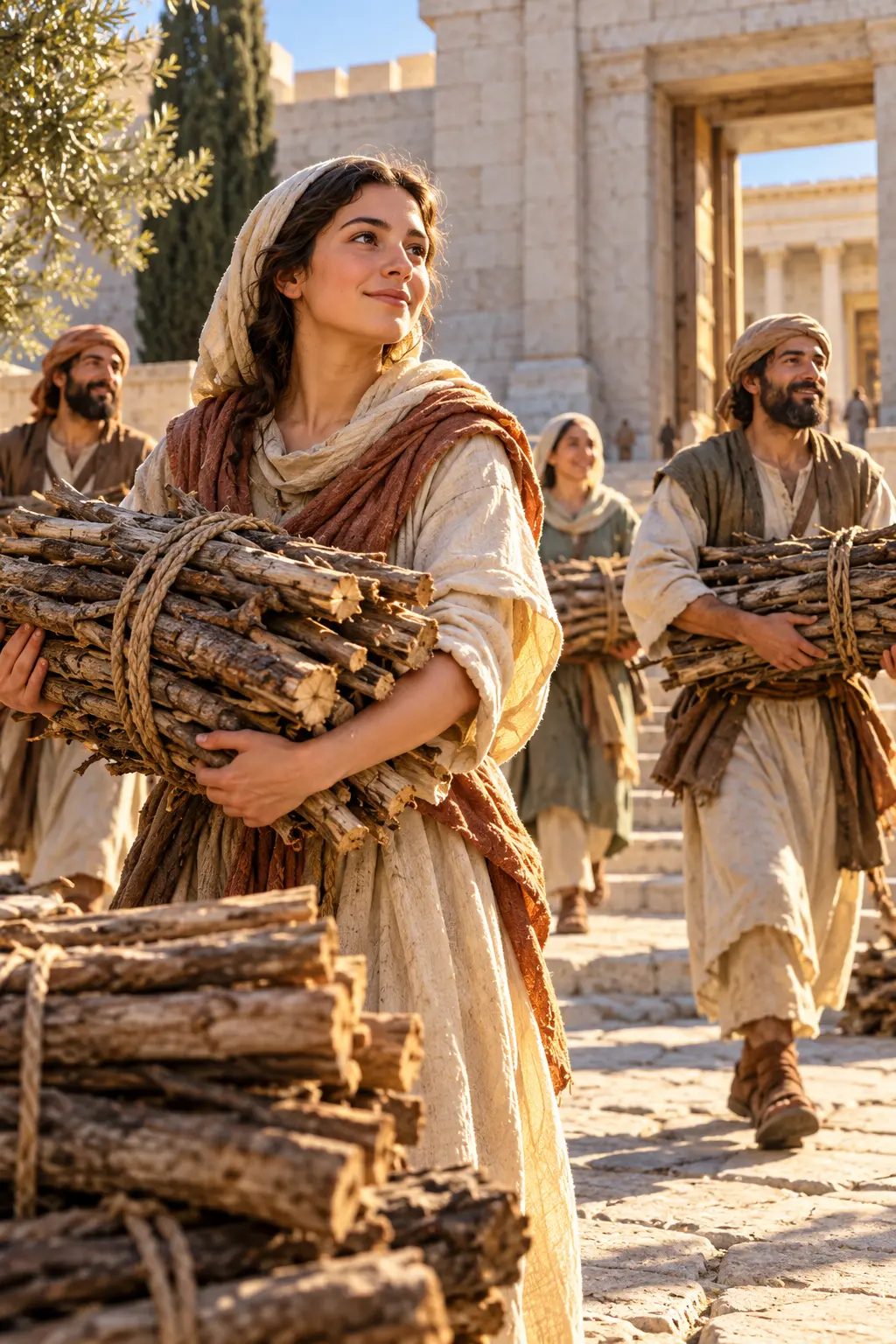 Wood OfferingProvision shared by a community
These are reading connections, not a claim that every witness commands every connected observance.
Take your question further
Continue in Scripture AI →Choose what to save. Adding a draft does not save your notebook.
THE WORDING, CLOSE AT HAND
Read the sources together
Choose one or two edition-specific excerpts. Keep each text’s own wording beside the questions it raises.
This is a selected study-excerpt collection. A linked source note may point to a longer edition, a fragment or a translation whose text has not been added here. These excerpts do not change the Scripture Library’s publication or AI evidence permissions.
Choose Read selections to open the reviewed wording. No AI question is submitted.
Highlighting compares vocabulary in these selections. It does not establish an ancient textual variant or decide which reading is correct.
THE ILLUSTRATED READING ROOM
Step into the story.
Stay close to the text.
Six authored studies. Eighteen chapters. Look carefully, listen, read the actual passage, and follow the connections.
Explore the connections atlas ↓Editorial retellings guide your study. Passage readings keep their edition labels. Every scene is AI-generated artwork with imagined faces, colors and settings.
A night to remember
A family prepares, leaves, and teaches the next generation.
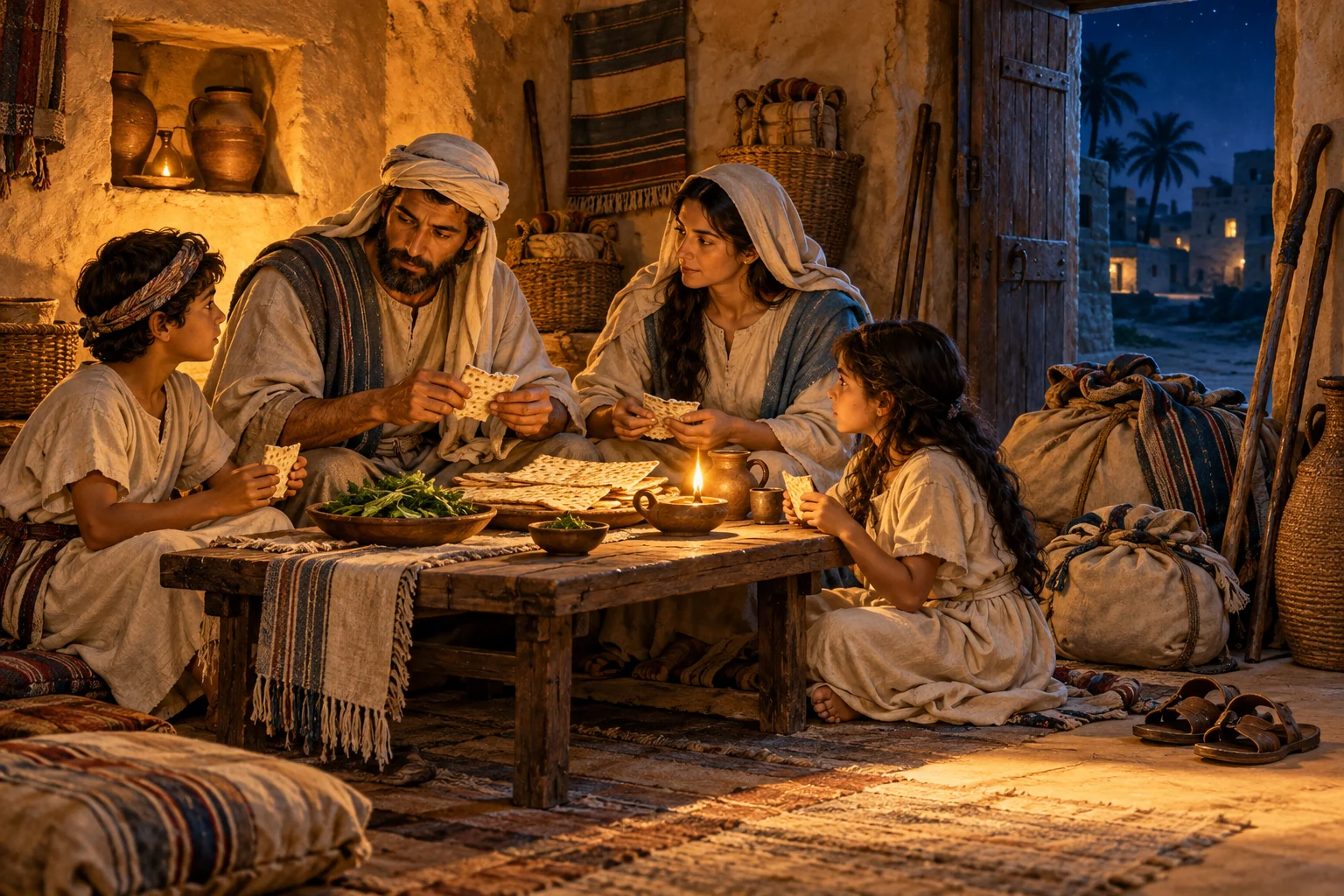
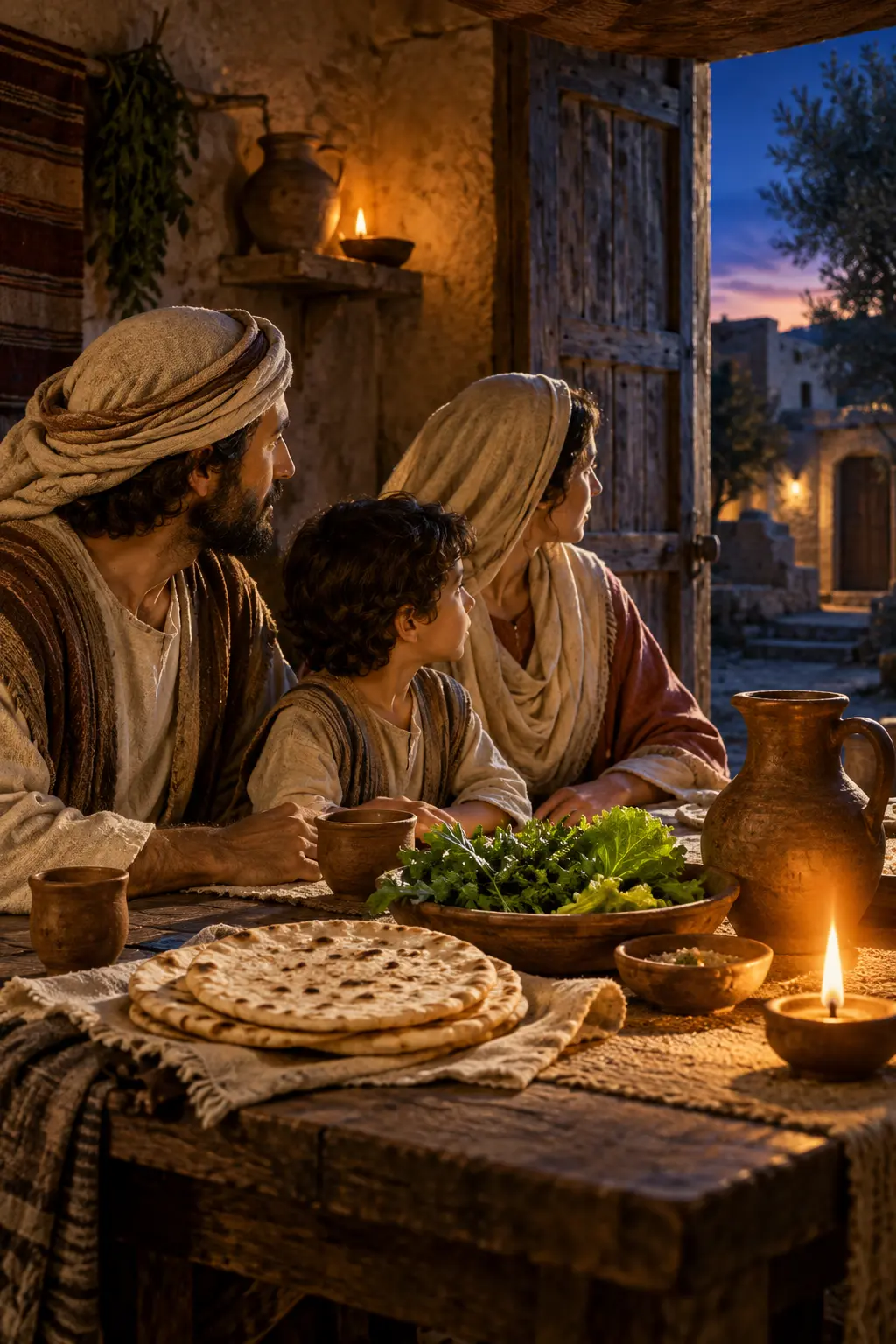
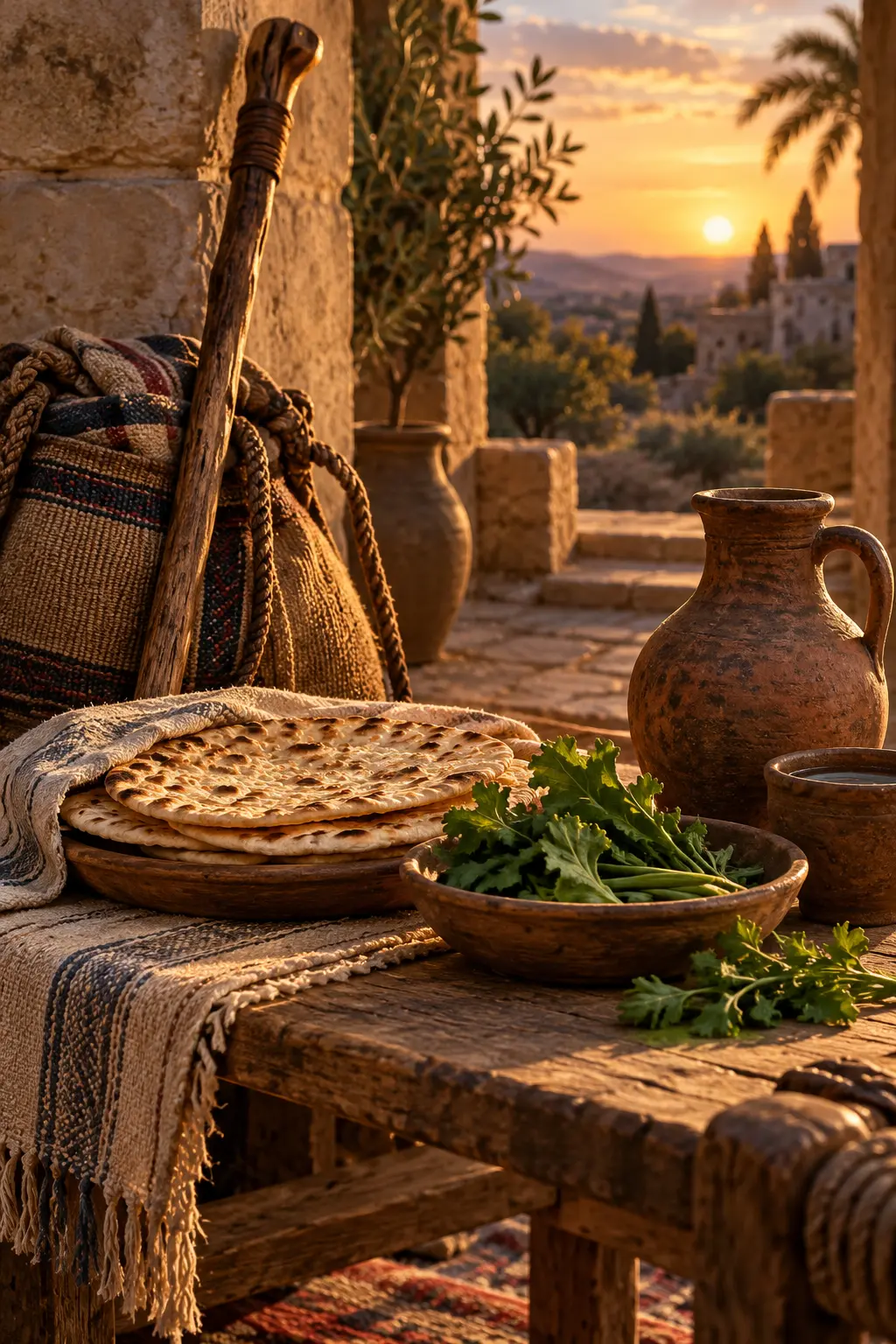
1. Bread and herbs · Text-backed objects
Exodus 12:8 names unleavened bread and bitter herbs. The picture does not show the complete prescribed meal; roasted lamb is also named.
Exodus 12:6-11 · King James Version; Project Gutenberg eBook 102. Packed bundles · Artistic choice
Bundles help suggest departure. Their shape, colors and placement are imagined; this image does not establish a historical household inventory.
Exodus 12:34-39 · King James Version; Project Gutenberg eBook 103. Travel readiness · Text and image differ
Exodus 12:11 specifies sandals on the feet and staff in hand. The seated, barefoot figures are artistic condensation, not an exact depiction of the instruction.
Exodus 12:6-11 · King James Version; Project Gutenberg eBook 10Uses your device’s available speech voice. Reading remains available without audio.
CHAPTER 1 OF 3 · EDITORIAL RETELLING
Ready at the table
Exodus describes a meal eaten with urgency. The instructions name roasted lamb, unleavened bread and bitter herbs, and call for dressed travelers with sandals and staffs. These concrete details connect remembrance to an actual departure. The picture gathers some of them into one imagined household; it does not reproduce every instruction. Notice the difference between an object named in the passage and an object that simply helps an artist tell the story. Then read the wording itself. Who receives the instructions, and what does the command to be ready add to the meal? A family discussion can begin with those observations without supplying invented dialogue or treating the painting as a ritual guide.
The family gets ready to travel. Read the list of foods and travel things with a grown-up. Which ones can you find in the picture?
Pause & consider Which details are instructions in the text, and which are artistic additions?
Exodus 12:6-11 · King James Version; Project Gutenberg eBook 10CHAPTER 2 OF 3 · EDITORIAL RETELLING
Bread for the journey
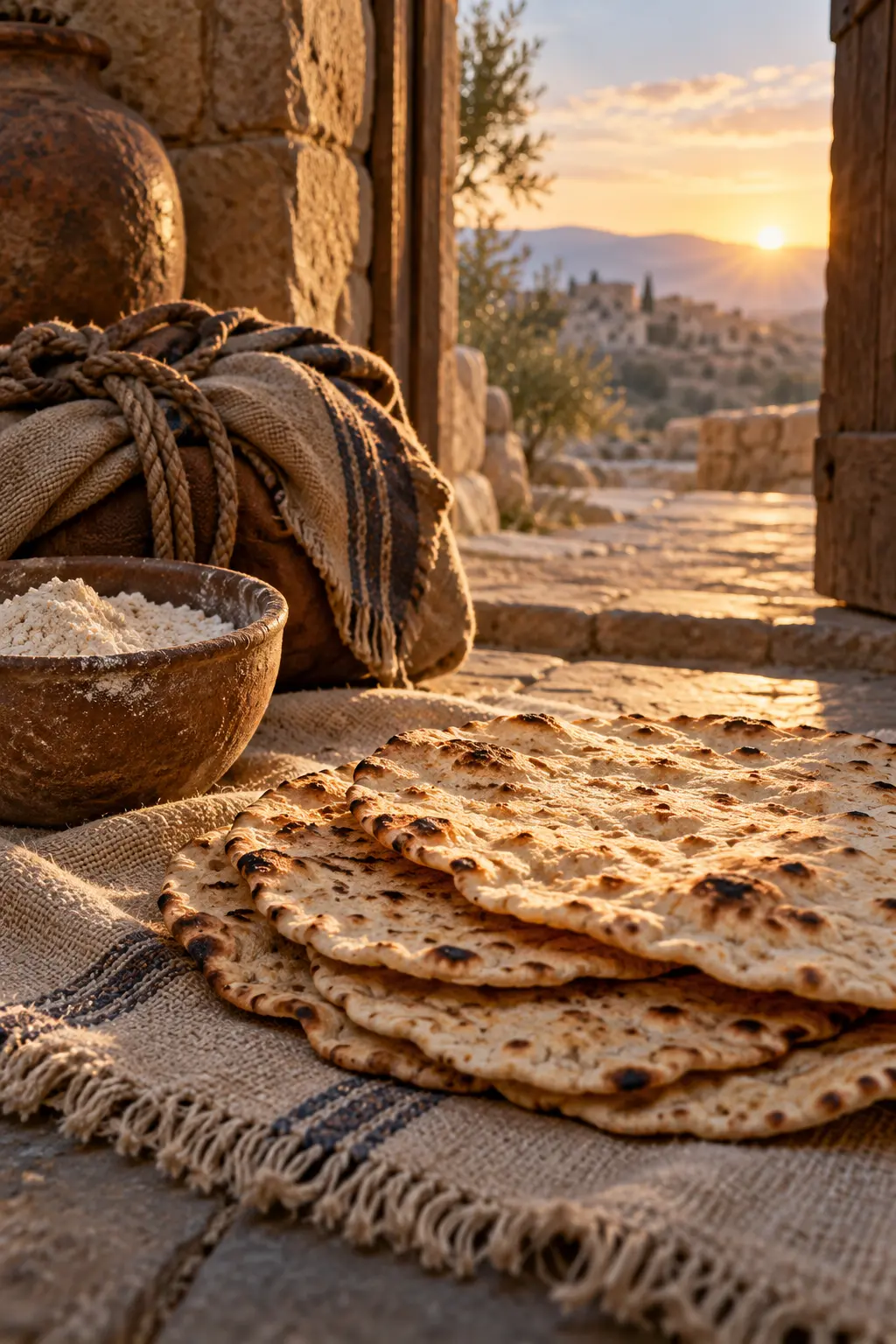
The narrative moves from preparation to departure. The people carry their dough before it is leavened, with kneading troughs wrapped in clothing. Later verses explain the unleavened cakes in terms of the urgent departure from Egypt. Read the cause and the action together rather than treating the bread as a disconnected symbol. The passage also describes a mixed multitude and livestock; a single family illustration cannot represent the whole company. Compare the objects in the account with those in the scene, and mark anything the scene leaves out. The study's retelling is a guide to observation. It does not replace the passage or establish the age, face or exact possessions of any pictured traveler.
The people carry dough and leave in a hurry. Find the verse that explains why the bread did not rise. What would you carry on a journey?
Pause & consider How does the passage explain the unleavened bread?
Exodus 12:34-39 · King James Version; Project Gutenberg eBook 10CHAPTER 3 OF 3 · EDITORIAL RETELLING
When children ask
Exodus anticipates a child's question about the service and gives the community a way to explain its remembrance. The answer turns toward deliverance and the preservation of households. This is a good place to let the child's question set the pace: read, ask, locate the answer, and allow another question. Jubilees 49 is a separate literary witness that develops Passover instructions and timing. Open its edition beside Exodus when comparing them; an added detail in Jubilees should stay attributed to Jubilees. A comparison can reveal different emphases without merging the accounts. Close by writing one sentence supported by Exodus and one question that would require more reading.
Children ask why this meal matters. Read the answer together. Tell someone one thing the passage actually says.
Pause & consider What does the explanation emphasize, and how would you keep another witness distinct?
Exodus 12:26-27 · King James Version; Project Gutenberg eBook 10Progress stays on this device when browser storage is available.
FOR CURIOUS READERS
Three ways to discover
Work together with a caregiver. These activities check observation and reading, not belief.
1. Put the story in order
Use the arrows to move each event, then check against the three chapters.
- Explain the remembrance when children ask
- Receive the meal instructions
- Carry the dough and depart
2. Look, then verify
3. Find the source
Caregiver’s source & answer guide
- Receive the meal instructions
- Carry the dough and depart
- Explain the remembrance when children ask
Bitter herbs — Exodus 12:8 names bitter herbs. Family size and cloth colors are imagined.
Source finding: Exodus 12:26–27.
Extension: draw a detail the text names, then label one choice you imagined.
From calling to song
Moses is called; Pharaoh refuses; Miriam leads a response.
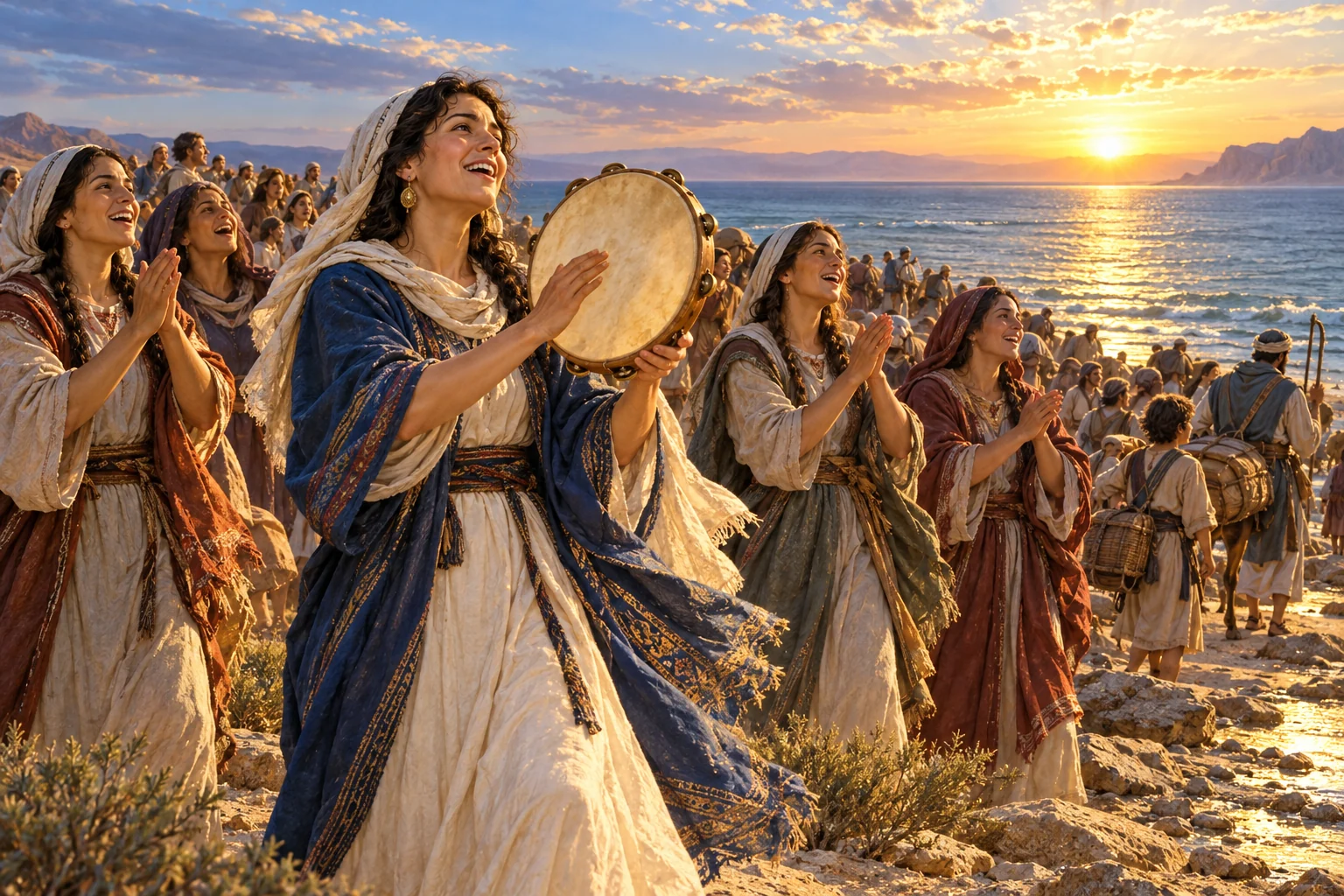
1. Miriam’s timbrel · Text-backed object
Exodus 15:20 explicitly names Miriam’s timbrel. Its exact size, material and decoration are artistic choices.
Exodus 15:20-21 · King James Version; Project Gutenberg eBook 102. Women responding · Text-backed group
The passage describes women following with timbrels and dances. It does not supply these faces or this arrangement.
Exodus 15:20-21 · King James Version; Project Gutenberg eBook 103. Sunrise and shoreline · Artistic choice
The specific terrain, time of day and colors do not come from these two verses.
Exodus 15:20-21 · King James Version; Project Gutenberg eBook 10Uses your device’s available speech voice. Reading remains available without audio.
CHAPTER 1 OF 3 · EDITORIAL RETELLING
A call in the wilderness
The account introduces Moses tending a flock before it describes the burning bush. The familiar work of a shepherd becomes the setting for an encounter that interrupts his routine. Read the sequence carefully: Moses notices, turns aside, hears his name, and is told to remove his shoes because the ground is holy. The text identifies the speaker and connects the encounter to the ancestors. It does not give the bush's species or a portrait of Moses. The shore illustration used in this study belongs to a later chapter, so it should not be treated as a picture of the calling. Keep the chapter's passage in view as you follow the larger movement from calling toward deliverance.
Moses notices something unusual and listens. This chapter happens before the shore picture. Find what he is told to do with his shoes.
Pause & consider What does Moses do before he hears the calling?
Exodus 3:1-6 · King James Version; Project Gutenberg eBook 10CHAPTER 2 OF 3 · EDITORIAL RETELLING
A demand and a refusal
Moses and Aaron address Pharaoh with a demand that Israel be allowed to hold a feast to the Lord in the wilderness. Pharaoh's response challenges the authority behind that demand and refuses to let Israel go. These brief verses establish a conflict, not its resolution. Avoid jumping straight from the first request to the later song as though nothing difficult occurs between them. The wider Exodus narrative contains the struggles that connect these moments. For this selected reading, identify who speaks, what is requested and what is refused. A careful retelling can name those three facts while acknowledging that the intervening chapters need to be read for a fuller account.
Moses and Aaron ask Pharaoh to let Israel go. Pharaoh refuses. Read who says each part; the celebration comes later.
Pause & consider How do the request and refusal frame the conflict?
Exodus 5:1-2 · King James Version; Project Gutenberg eBook 10CHAPTER 3 OF 3 · EDITORIAL RETELLING
Miriam takes the timbrel
After the crossing, Miriam is identified as a prophetess and as Aaron's sister. She takes a timbrel, and the women go out after her with timbrels and dances. Her response turns attention toward the Lord's victory. The new scene illustrates this moment through faces, landscape and morning light that the verses do not specify. The timbrel and the group of women have textual anchors; the exact shoreline does not. The song also refers to violent events, so caregivers can choose how much surrounding narrative is suitable for their children. Adults can compare the roles of Moses and Miriam in the chapter while preserving the names and titles the passage actually supplies.
Miriam takes a timbrel and the women follow her. Read the song with a grown-up. Which musical object is named?
Pause & consider Which details in the song scene are stated, and which remain unknown?
Exodus 15:20-21 · King James Version; Project Gutenberg eBook 10Progress stays on this device when browser storage is available.
FOR CURIOUS READERS
Three ways to discover
Work together with a caregiver. These activities check observation and reading, not belief.
1. Put the story in order
Use the arrows to move each event, then check against the three chapters.
- Miriam leads women with timbrels
- Moses encounters the calling at the bush
- Moses and Aaron speak to Pharaoh
2. Look, then verify
3. Find the source
Caregiver’s source & answer guide
- Moses encounters the calling at the bush
- Moses and Aaron speak to Pharaoh
- Miriam leads women with timbrels
A timbrel — The timbrel is named; the pictured instrument’s design is imagined.
Source finding: Exodus 15:20–21.
Extension: draw a detail the text names, then label one choice you imagined.
Loyalty in the barley fields
Ruth commits, gleans, and becomes part of a public family story.
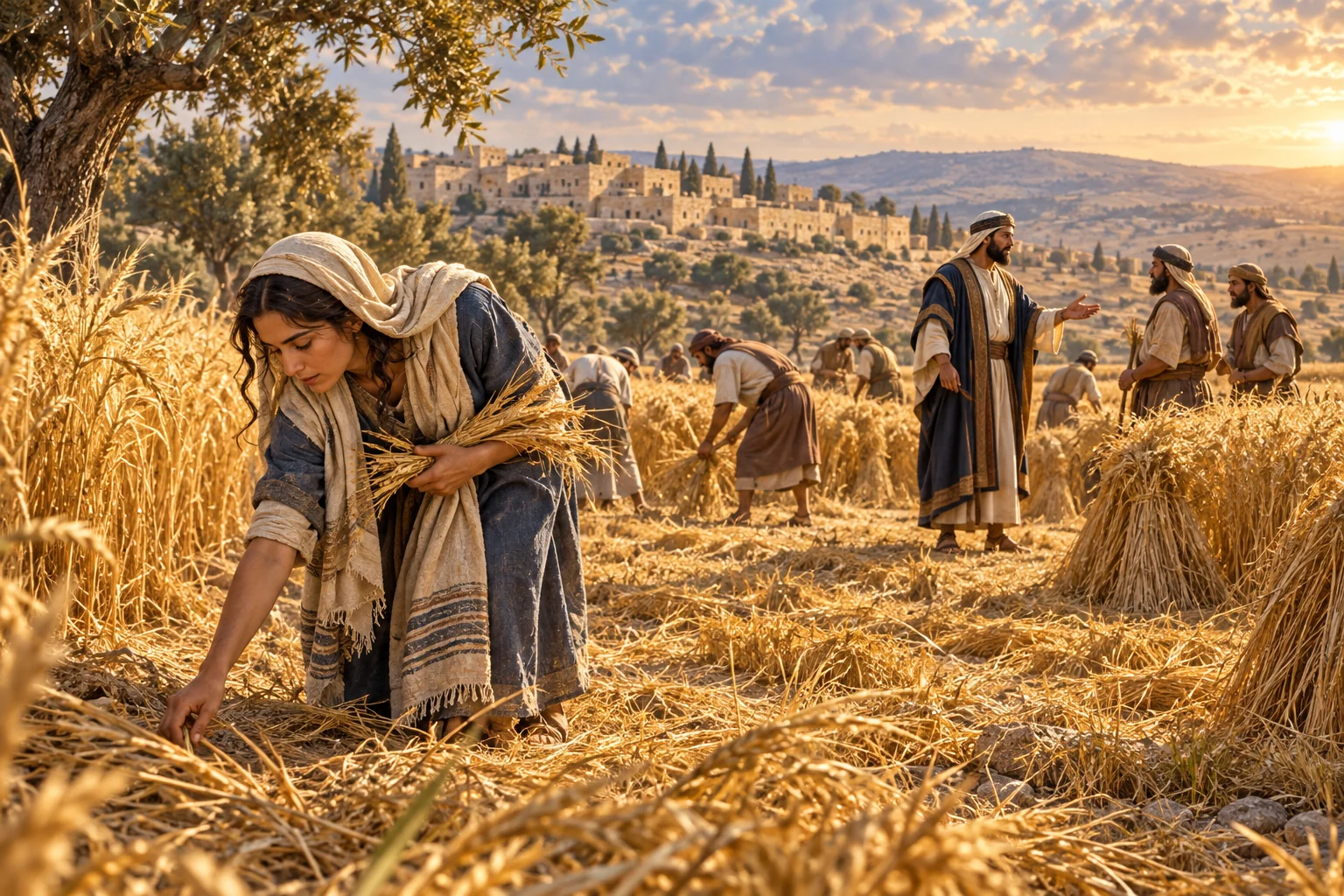
1. Gleaning · Text-backed action
Ruth 2 records gleaning. The exact posture, face and clothing are imagined.
Ruth 2:8-12 · King James Version; Project Gutenberg eBook 102. Boaz and workers · Text-backed roles
Boaz addresses Ruth and gives instructions to the workers. The image does not establish who stood in each position.
Ruth 2:8-12 · King James Version; Project Gutenberg eBook 103. Bethlehem landscape · Artistic reconstruction
The village, skyline and field layout are imagined, not an excavated view. The grain depiction is stylized.
Ruth 1:16-19 · King James Version; Project Gutenberg eBook 10Uses your device’s available speech voice. Reading remains available without audio.
CHAPTER 1 OF 3 · EDITORIAL RETELLING
A choice to remain
Ruth's response to Naomi brings a journey and a relationship into focus. She speaks of going where Naomi goes, lodging where she lodges, and joining her people and her God. Read the commitment in its setting rather than reducing it to a decorative quotation. The women continue until they reach Bethlehem, where their arrival draws attention. The text gives Ruth words to speak; the study does not invent additional conversations. Notice how the passage links belonging with action. The field illustration belongs to the next stage of the narrative, not to this conversation on the road. Keeping those settings separate helps readers follow the movement of the story.
Ruth chooses to stay with Naomi. They go to Bethlehem. Listen for the promises Ruth makes, then tell one in your own words.
Pause & consider How is Ruth’s commitment expressed through places and relationships?
Ruth 1:16-19 · King James Version; Project Gutenberg eBook 10CHAPTER 2 OF 3 · EDITORIAL RETELLING
Room to gather
In the field, Boaz tells Ruth where to glean and speaks about protection and water. Ruth asks why she has found favor when she is a foreigner. Boaz's reply connects his response to what he has heard about her care for Naomi and her departure from her own family and land. The passage offers concrete actions to examine alongside its language of refuge. Look for what Ruth may do, what the workers have been told, and what Boaz says he knows. The painting imagines the field and the people. Its grain is stylized; the exact appearance of the stalks should not be used to identify an ancient crop variety.
Boaz makes room for Ruth to gather grain and get water. Find one way he tells the workers to treat her. Why is she surprised?
Pause & consider What practical protections and provisions are named?
Ruth 2:8-12 · King James Version; Project Gutenberg eBook 10CHAPTER 3 OF 3 · EDITORIAL RETELLING
Witnesses at the gate
The selected scene at the gate explains a custom involving a shoe and then records a public declaration before elders and other people. Boaz names the family property and his marriage to Ruth within the account's concern for preserving a name. This is a legal and family setting in an ancient narrative; it should not be turned into an instruction for modern transactions without further study. Read who is named and who serves as witness. Compare this public moment with Ruth's earlier personal commitment. The three chapters trace different kinds of belonging: a chosen relationship, care in a field, and a declaration made before a community.
People at the gate hear a public promise. Find the object used in the custom and the people asked to be witnesses.
Pause & consider How does a public witness differ from a private promise?
Ruth 4:7-10 · King James Version; Project Gutenberg eBook 10Progress stays on this device when browser storage is available.
FOR CURIOUS READERS
Three ways to discover
Work together with a caregiver. These activities check observation and reading, not belief.
1. Put the story in order
Use the arrows to move each event, then check against the three chapters.
- Boaz makes a declaration before witnesses
- Ruth chooses to remain with Naomi
- Ruth gathers grain in Boaz’s field
2. Look, then verify
3. Find the source
Caregiver’s source & answer guide
- Ruth chooses to remain with Naomi
- Ruth gathers grain in Boaz’s field
- Boaz makes a declaration before witnesses
Water from the vessels — The passage tells Ruth she may drink from the water drawn by the young men.
Source finding: Ruth 4:7–10.
Extension: draw a detail the text names, then label one choice you imagined.
Five stones, a larger question
Read the challenger, the preparation, and David’s stated confidence.
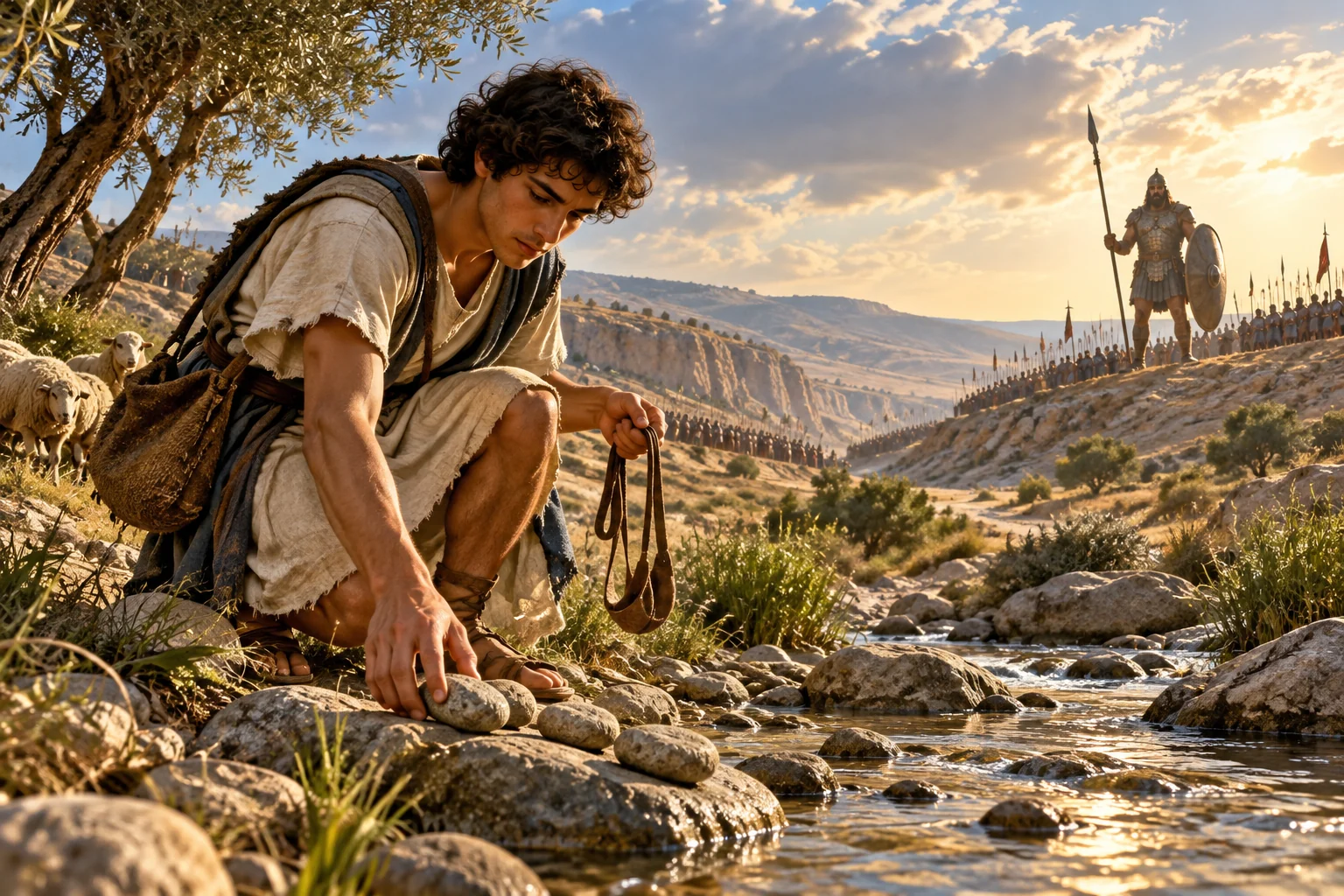
1. Stones at the brook · Text-backed detail
1 Samuel 17:40 specifies five smooth stones. Visible stones elsewhere in the scene are scenery, not a second textual count.
1 Samuel 17:38-40 · King James Version; Project Gutenberg eBook 102. Sling and bag · Text-backed equipment
The passage names a sling and shepherd’s bag. Their exact construction and David’s appearance are imagined.
1 Samuel 17:38-40 · King James Version; Project Gutenberg eBook 103. Distant Goliath · Artistic scale
The composition emphasizes contrast. Perspective and painted scale do not establish a height reading or an exact battlefield view.
1 Samuel 17:4-7 · King James Version; Project Gutenberg eBook 10Uses your device’s available speech voice. Reading remains available without audio.
CHAPTER 1 OF 3 · EDITORIAL RETELLING
An imposing challenger
The narrative introduces Goliath from Gath and describes his height, armor and weapons. The detail creates an imposing portrait before David's preparation is described. These selected verses follow the King James Version's wording. Other ancient textual witnesses preserve a different height reading, so the painting's scale cannot settle that textual question. An English illustration also cannot establish exact equipment dimensions or facial features. Read the list of equipment and distinguish what is carried from what is worn. This close observation lets the contrast with David's later choices emerge from the account itself. The study keeps the violent outcome outside the illustrated scene so families can choose how to approach the surrounding chapter.
Goliath is described with armor and weapons. Read a suitable part with a grown-up. The picture cannot tell us his exact appearance.
Pause & consider What does the equipment list contribute to the narrative?
1 Samuel 17:4-7 · King James Version; Project Gutenberg eBook 10CHAPTER 2 OF 3 · EDITORIAL RETELLING
Equipment David has tested
Saul clothes David with armor, but David removes it because he has not proved it. He then takes his staff, chooses five smooth stones from the brook, places them in a shepherd's bag, and carries his sling. The passage supplies a sequence of choices rather than a lesson that preparation never matters. Watch how unfamiliar equipment gives way to familiar tools. Our scene combines the brook with a distant view of the challenger; the exact viewpoint is an artistic construction. The stones and sling are the most direct visual anchors. Count the number the text names, and ask why a specific practical detail might be preserved in a story about trust.
David takes off equipment he has not tested. He chooses five smooth stones and carries a sling. Find the number in the passage.
Pause & consider Why does David give back the armor, and what does he choose instead?
1 Samuel 17:38-40 · King James Version; Project Gutenberg eBook 10CHAPTER 3 OF 3 · EDITORIAL RETELLING
What David says the battle means
David answers the challenge by contrasting weapons with the name of the Lord. He states that the gathered people will know that the Lord does not save by sword and spear. Read this as David's speech within the narrative and locate the words that support any summary you make. A devotional application may grow from the passage, but it should stay distinct from the quotation and from the particular conflict being narrated. The story's conclusion involves violence; caregivers should decide how to read the rest of the chapter. For this study, compare Goliath's equipment list, David's chosen tools and the confidence David explicitly expresses.
David says his confidence is in the Lord. Read his words with a grown-up and find the part about sword and spear.
Pause & consider How would you separate David’s stated claim from your own application?
1 Samuel 17:45-47 · King James Version; Project Gutenberg eBook 10Progress stays on this device when browser storage is available.
FOR CURIOUS READERS
Three ways to discover
Work together with a caregiver. These activities check observation and reading, not belief.
1. Put the story in order
Use the arrows to move each event, then check against the three chapters.
- David states his confidence before the encounter
- Read Goliath’s equipment description
- David removes unfamiliar armor and chooses stones
2. Look, then verify
3. Find the source
Caregiver’s source & answer guide
- Read Goliath’s equipment description
- David removes unfamiliar armor and chooses stones
- David states his confidence before the encounter
Five — 1 Samuel 17:40 names five smooth stones.
Source finding: 1 Samuel 17:45–47.
Extension: draw a detail the text names, then label one choice you imagined.
Courage before the throne
A message, an approach, and a remembered deliverance.
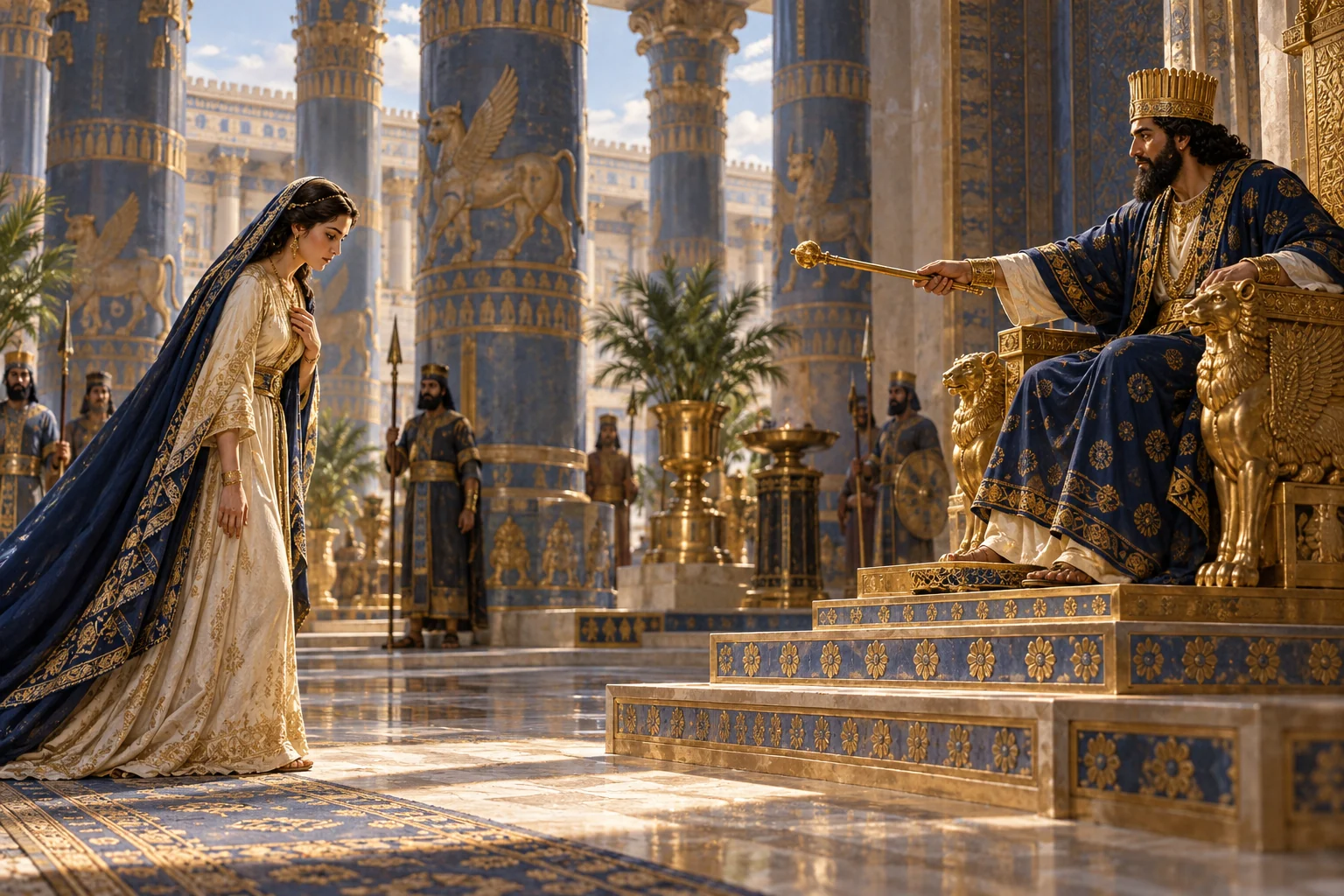
1. Golden scepter · Text-backed object
Esther 5:2 names the golden scepter and her touch. The exact design and distance are imagined.
Esther 5:1-4 · King James Version; Project Gutenberg eBook 102. Esther’s apparel · Text plus artistic choice
The passage says royal apparel; this garment’s cut, embroidery and colors are not specified.
Esther 5:1-4 · King James Version; Project Gutenberg eBook 103. Persian court · Artistic reconstruction
The scene is inspired by a Persian court, not a verified reconstruction of this exact room.
Esther 5:1-4 · King James Version; Project Gutenberg eBook 10Uses your device’s available speech voice. Reading remains available without audio.
CHAPTER 1 OF 3 · EDITORIAL RETELLING
A decision with a cost
Mordecai's message warns Esther that her place in the royal household will not necessarily protect her. He also raises the possibility that her position has meaning for this crisis. Esther responds by requesting a fast and setting out her intention to approach the king despite the danger. Read the conditional language and the decision together. The narrative gives a serious situation, not a promise that every courageous action will have an easy outcome. A family can discuss asking others for support before taking a difficult step. The study does not invent Esther's private thoughts or use an imagined face as evidence of her emotions. Begin with her recorded words and actions.
Esther asks others to fast with her before she approaches the king. Read with a grown-up and find how she asks for help.
Pause & consider What support does Esther request before acting?
Esther 4:13-16 · King James Version; Project Gutenberg eBook 10CHAPTER 2 OF 3 · EDITORIAL RETELLING
The extended scepter
Esther stands in the inner court and the king holds out the golden scepter. She approaches and touches its top. When the king asks her request, she invites him and Haman to a banquet. These selected verses unfold through several small actions; they do not immediately reveal the whole resolution. Watch the pace of the scene and identify which action permits Esther to come near. The painting draws on a Persian court setting, but its architecture, garments and seating are reconstructed artistic choices. The text's reference to royal apparel does not establish the pictured dress. Read the next chapters for the developing conflict rather than treating one image as the entire story.
The king holds out a golden scepter. Esther approaches and invites him to a meal. Find the object she touches.
Pause & consider Which action changes what Esther can do next?
Esther 5:1-4 · King James Version; Project Gutenberg eBook 10CHAPTER 3 OF 3 · EDITORIAL RETELLING
Remembering with generosity
The selected closing passage describes Mordecai recording the events and sending letters about an annual remembrance. The instructions include feasting, joy, sending portions to one another and gifts to the poor. Notice that remembrance reaches outward into care for other people. The wider chapter includes violence and difficult historical questions, so caregivers may choose these selected verses for younger readers while acknowledging the fuller account. Purim is its own commemoration in Esther's narrative; it should not silently be treated as one of Leviticus 23's appointments. End by locating one practice the passage names and describing a thoughtful act of generosity in your own setting.
The remembrance includes sharing food and gifts for the poor. Find one way the celebration helps someone else.
Pause & consider How do giving and remembrance belong together in this passage?
Esther 9:20-22 · King James Version; Project Gutenberg eBook 10Progress stays on this device when browser storage is available.
FOR CURIOUS READERS
Three ways to discover
Work together with a caregiver. These activities check observation and reading, not belief.
1. Put the story in order
Use the arrows to move each event, then check against the three chapters.
- The community receives instructions for remembrance
- Esther requests a fast
- Esther approaches and receives the scepter
2. Look, then verify
3. Find the source
Caregiver’s source & answer guide
- Esther requests a fast
- Esther approaches and receives the scepter
- The community receives instructions for remembrance
A golden scepter — Esther 5:2 identifies the golden scepter.
Source finding: Esther 9:20–22.
Extension: draw a detail the text names, then label one choice you imagined.
A place restored for worship
Inspect the sanctuary, renew its furnishings, and remember its dedication.
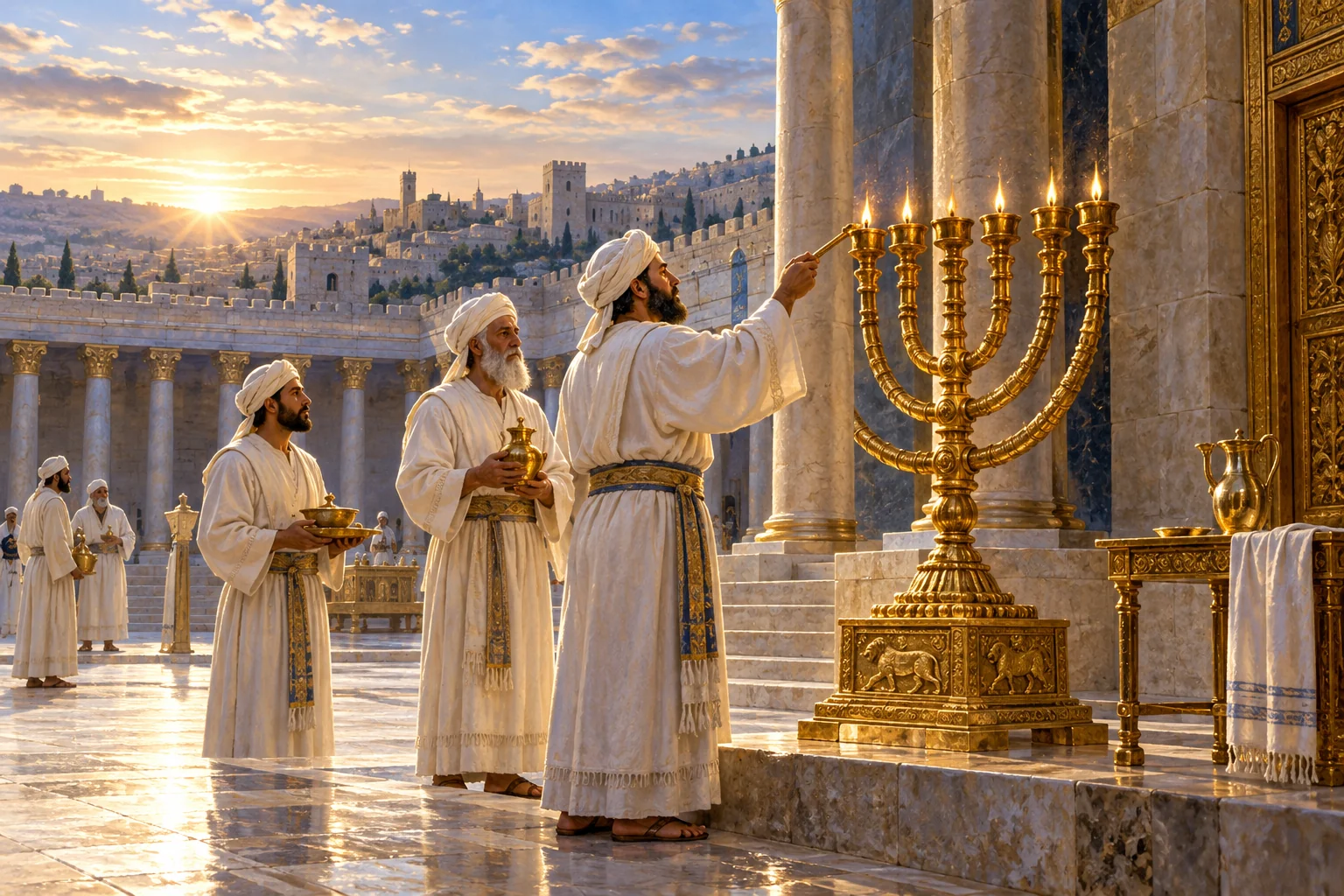
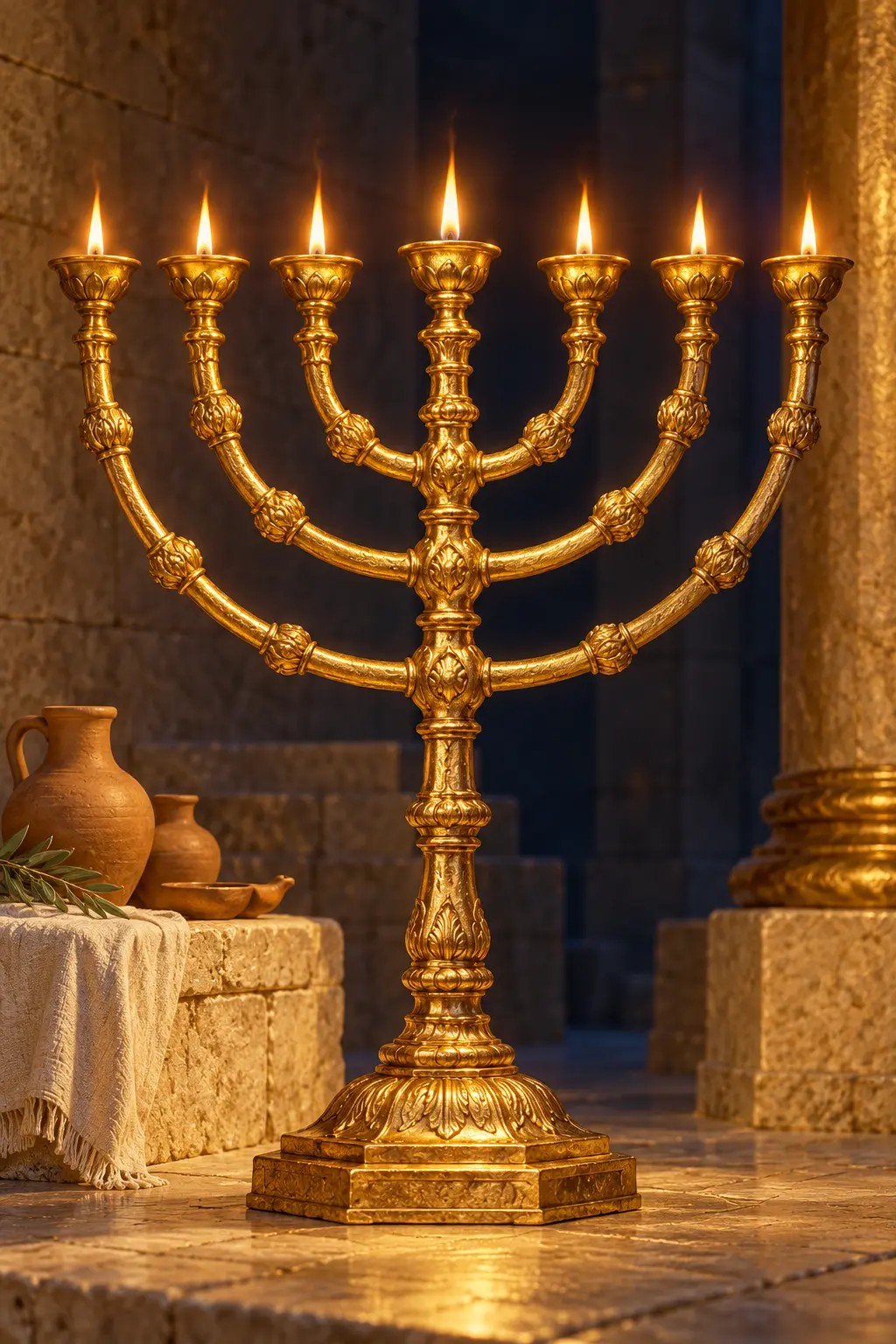
1. Lampstand · Text-backed furnishing
1 Maccabees 4:49–50 names the lampstand and lighting the lamps. The seven-branched design is an artistic reconstruction of a temple lampstand.
1 Maccabees 4:49-59 · Douay-Rheims, Challoner revision; Project Gutenberg eBook 83002. Open courtyard setting · Image and text differ
The verse says the furnishings were brought into the temple. The open setting helps show the scene but is not an exact depiction of their prescribed placement.
1 Maccabees 4:49-59 · Douay-Rheims, Challoner revision; Project Gutenberg eBook 83003. Priests and garments · Artistic reconstruction
The people, faces, garments and arrangement are imagined. The painting does not independently prove a ritual detail.
1 Maccabees 4:36-40 · Douay-Rheims, Challoner revision; Project Gutenberg eBook 8300Uses your device’s available speech voice. Reading remains available without audio.
CHAPTER 1 OF 3 · EDITORIAL RETELLING
Seeing what needs repair
In the Douay-Rheims selection from 1 Maccabees, Judas and his brothers turn toward cleansing and rededicating the sanctuary. The account describes what they find and their response to it. Read those details before jumping to the later celebration: restoration begins with looking honestly at what has been damaged. This is a distinct Second Temple narrative, not a scene from Moses' wilderness tabernacle. The broad temple view in the painting is an artistic interpretation and should not be used as an architectural plan. For younger readers, caregivers may summarize the damaged setting without dwelling on the preceding military conflict. Ask what the community chooses to do next.
The people see that the sanctuary needs care. They decide to cleanse and restore it. Read a suitable part with a grown-up.
Pause & consider What does the account describe before the work of dedication?
1 Maccabees 4:36-40 · Douay-Rheims, Challoner revision; Project Gutenberg eBook 8300CHAPTER 2 OF 3 · EDITORIAL RETELLING
New furnishings, renewed light
The passage describes making new holy vessels and bringing the lampstand, altar of incense and table into the temple. Lamps are lit, incense is offered, and bread is set on the table. These are the scene's most direct textual anchors. The illustration places the lampstand in an open architectural setting for visibility; the verse says it is brought into the temple. Its exact construction and surrounding architecture remain artistic choices. The pictured lampstand has seven branches. The later Hanukkah lamp with eight lights and a helper light belongs to a different ritual setting. Do not read a modern object or a later oil-miracle tradition into wording that does not state it.
The lamps are lit and the temple is prepared for worship. The painting shows a seven-branched lampstand. Read what the passage actually says is brought inside.
Pause & consider Which actions and furnishings does the account explicitly name?
1 Maccabees 4:49-59 · Douay-Rheims, Challoner revision; Project Gutenberg eBook 8300CHAPTER 3 OF 3 · EDITORIAL RETELLING
Eight days, and a later setting
First Maccabees 4:56–59 describes an eight-day dedication celebration and its annual remembrance. John 10:22–23 places Jesus at Jerusalem during the feast of dedication in winter and names Solomon's porch. These are connected readings from different works and settings. John's short notice does not retell the rededication, describe its whole ritual, or establish an endorsement of every later custom. Open both editions and identify the precise connection each makes. Helpful Saints maps this commemoration on its primary calendar while keeping the Hebrew comparison separate. The civil conversion is a calendar-model result, not a date supplied by the painting. Close by writing one supported statement from each witness.
One passage tells about dedication; John names a later feast of dedication in winter. Read the two separately and find what each one says.
Pause & consider What connection is explicit, and what would require another source?
John 10:22-23 · King James Version; Project Gutenberg eBook 10Progress stays on this device when browser storage is available.
FOR CURIOUS READERS
Three ways to discover
Work together with a caregiver. These activities check observation and reading, not belief.
1. Put the story in order
Use the arrows to move each event, then check against the three chapters.
- Keep the eight-day dedication remembrance
- Inspect the damaged sanctuary
- Prepare furnishings and light the lamps
2. Look, then verify
3. Find the source
Caregiver’s source & answer guide
- Inspect the damaged sanctuary
- Prepare furnishings and light the lamps
- Keep the eight-day dedication remembrance
They lit the lamps — Lighting the lamps is stated. The later oil-miracle account is not stated in this selection.
Source finding: John 10:22–23.
Extension: draw a detail the text names, then label one choice you imagined.
Read the wording
THE CONNECTIONS ATLAS
Follow a thread worth exploring.
These curated links explain their evidence type. A shared theme does not establish identity, kinship, a historical date, or a command to observe a feast.
Moses → Passover
Exodus 12 places the instructions within Moses’ leadership of the departure.
Exodus 12:6-11 · King James Version; Project Gutenberg eBook 10Passover → Unleavened Bread
Leviticus 23 distinguishes the fourteenth-day Passover appointment and the following feast.
Leviticus 23:4-8 · King James Version; Project Gutenberg eBook 10Exodus → Jubilees 49
Compare the retelling without assigning its additional instructions to Exodus.
Jubilees 49:1 · R. H. Charles, The Apocrypha and Pseudepigrapha of the Old Testament, Oxford: Clarendon Press, 1913; linked transcriptionMoses → Miriam
Both participate in the Exodus narrative; this excerpt specifically names Miriam and Aaron.
Exodus 15:20-21 · King James Version; Project Gutenberg eBook 10Calling → Passover
The call and confrontation precede the Passover instructions in Exodus.
Exodus 12:6-11 · King James Version; Project Gutenberg eBook 10Ruth → Boaz
Ruth 2 records Boaz’s provision and Ruth’s response.
Ruth 2:8-12 · King James Version; Project Gutenberg eBook 10Ruth → Naomi
Ruth’s commitment to Naomi anchors the journey.
Ruth 1:16-19 · King James Version; Project Gutenberg eBook 10Ruth → Harvest readings
A harvest narrative can be read beside harvest appointments; this does not establish an appointment date for Ruth’s field scene.
Leviticus 23:9-14 · King James Version; Project Gutenberg eBook 10David → Goliath
The chapter sets the two figures in a direct encounter.
1 Samuel 17:45-47 · King James Version; Project Gutenberg eBook 10Goliath → Og
Both are useful in a study of giant traditions; this connection does not prove kinship or equal measurements.
1 Samuel 17:4-7 · King James Version; Project Gutenberg eBook 10Goliath → Book of Giants
Compare distinct giant traditions. The thematic link is not an identification of the characters or their narratives.
1 Samuel 17:4-7 · King James Version; Project Gutenberg eBook 10Esther → Purim
Esther 9 connects the letters and annual remembrance with the narrated deliverance.
Esther 9:20-22 · King James Version; Project Gutenberg eBook 10Esther → Mordecai
Mordecai sends the warning and Esther sends her request.
Esther 4:13-16 · King James Version; Project Gutenberg eBook 10Dedication → 1 Maccabees
The selected Douay-Rheims passage describes the restored furnishings and eight-day celebration.
1 Maccabees 4:49-59 · Douay-Rheims, Challoner revision; Project Gutenberg eBook 8300Dedication → Jesus in John
John places Jesus at the feast of dedication; this short notice does not describe every custom.
John 10:22-23 · King James Version; Project Gutenberg eBook 10Dedication → Booths
Both involve multi-day celebrations. Similar duration alone does not identify them as the same observance.
Leviticus 23:33-36 · King James Version; Project Gutenberg eBook 10YOUR ZADOK COMPANION
Prepare for what is ahead.
Helpful Saints affirms the Essene/Zadok calendar as the true calendar.
Choose a native AM year, explore its observances, open preparation readings, or add an all-day calendar copy to your own calendar. Historical commemorations retain their labels.
Open the calendar companion to load verified native dates.
Gregorian dates identify daytime. Hebrew and Julian same-day labels are comparison conversions, not separate Zadok appointments. Hebrew days begin at the preceding sunset. The native engine’s civil anchor and leap-week schedule remain published model choices. Calendar downloads do not schedule emails or send notifications.
YOUR NEXT DISCOVERY
My collection & study notebook
Checking where your notebook can be saved…
Loading your notebook…
Keep notes about your study. Anyone using this signed-in account can access its notebook.
Open my saved studies
Your collection begins with one card. Save a favorite or add a study note.
CHOOSE YOUR NEXT DISCOVERY
The illustrated collection
 Torah appointmentsPassoverRemembering deliverance
 Torah appointmentsUnleavened BreadA journey remembered in bread
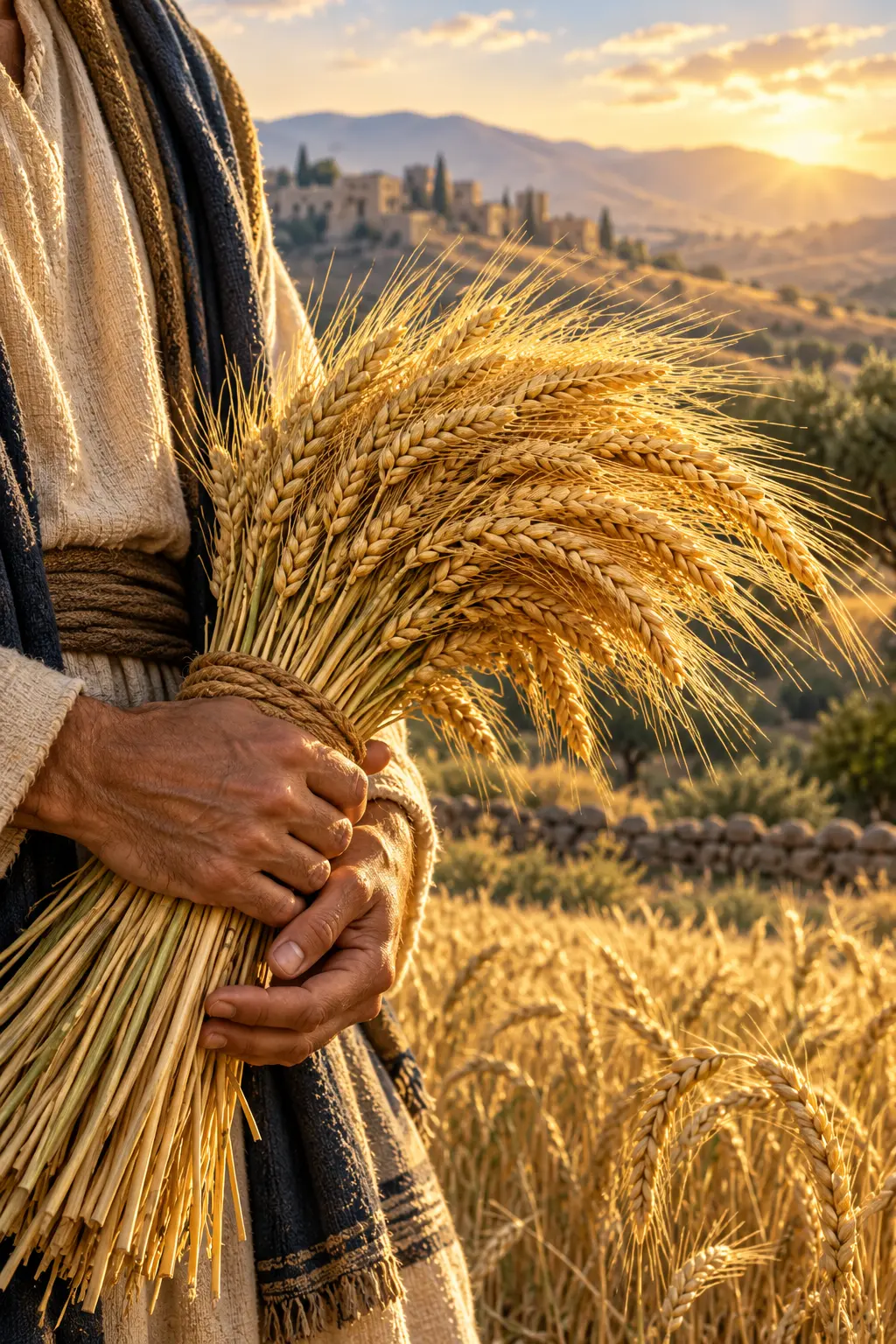 Torah appointmentsFirstfruits of BarleyThe first sheaf of the harvestTorah appointmentsWeeks / Firstfruits of WheatCounting toward a shared harvest
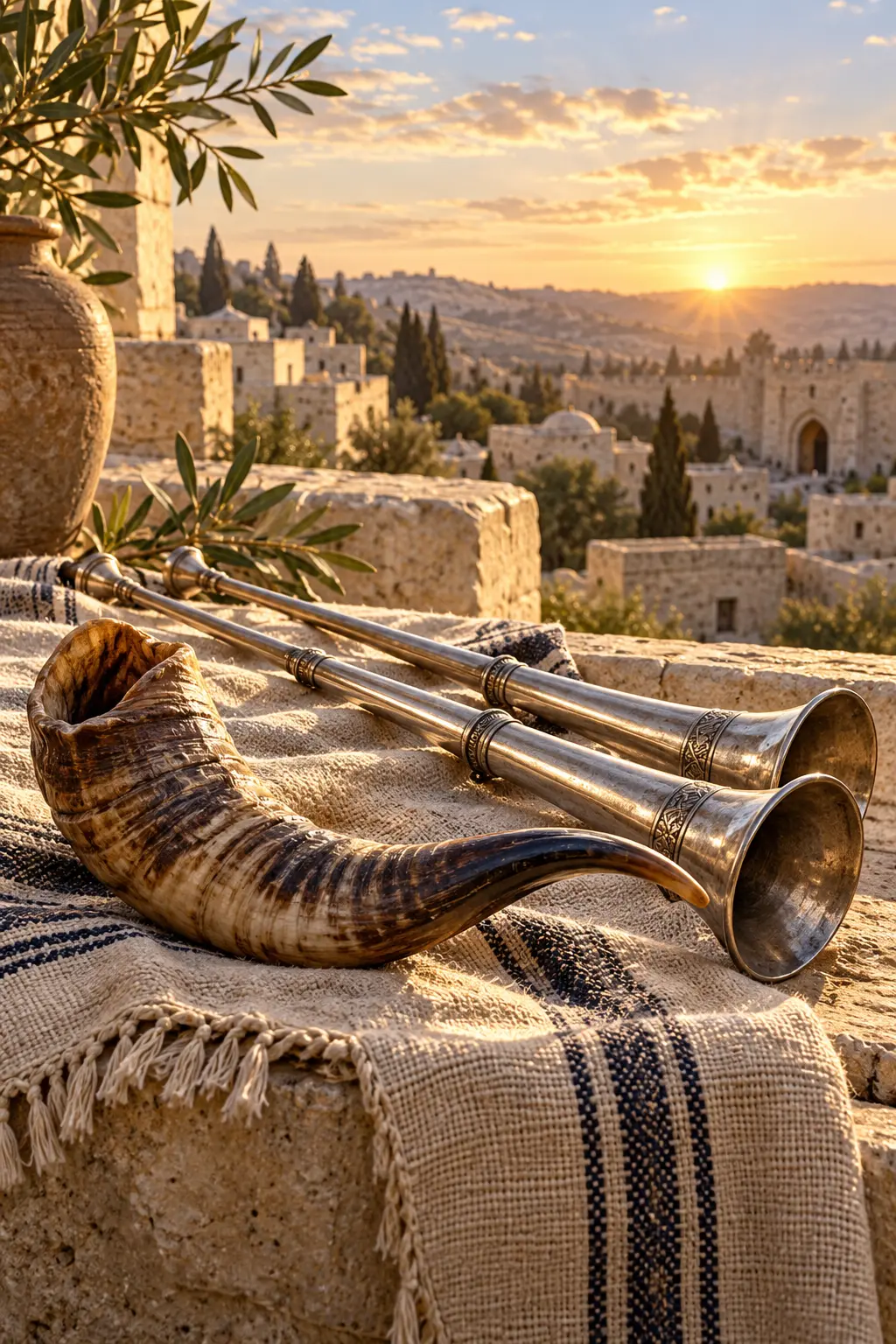 Torah appointmentsTrumpets / Day of RemembranceA call to remember
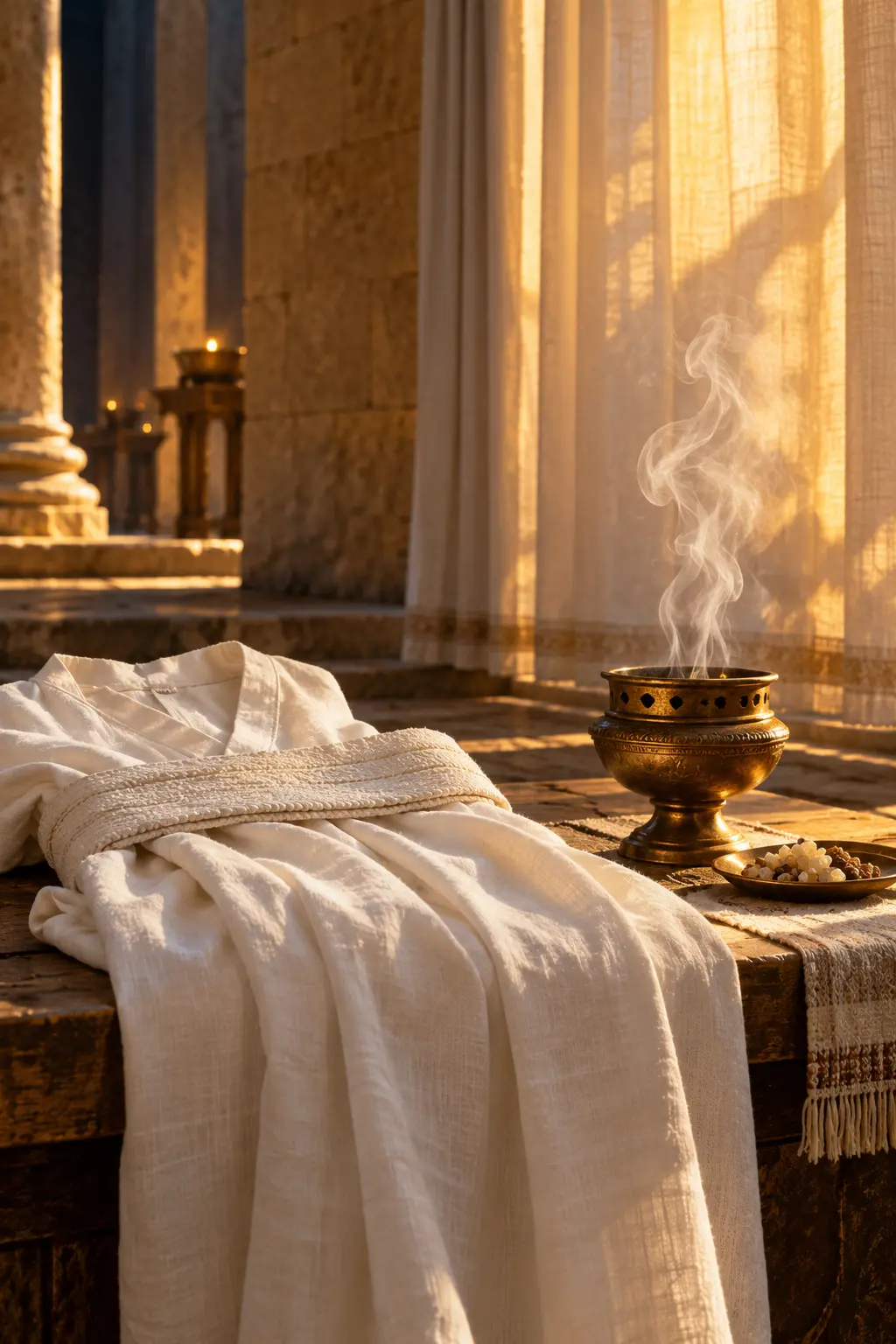 Torah appointmentsDay of AtonementHumility, cleansing and return
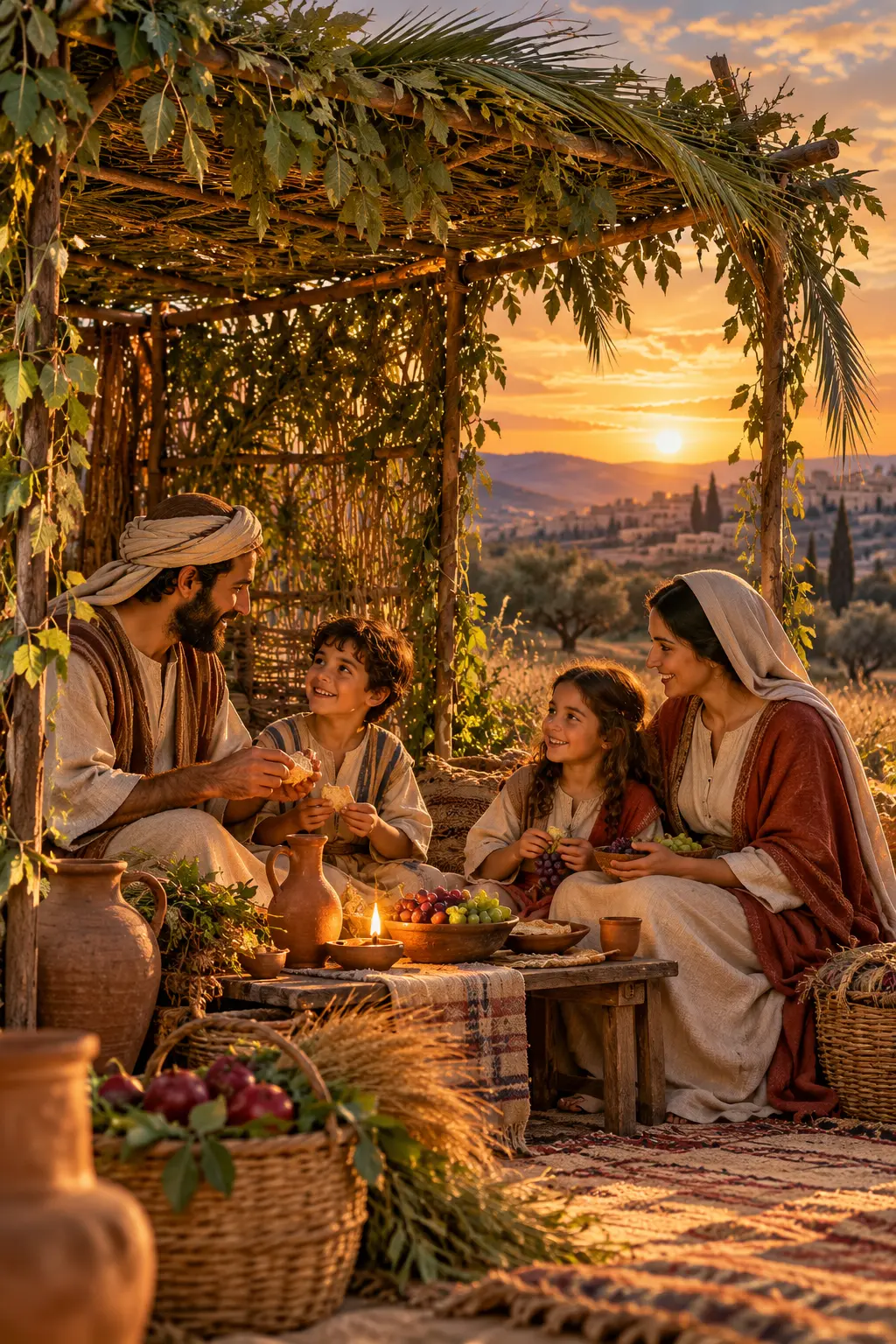 Torah appointmentsBooths / TabernaclesRemembering life in shelters
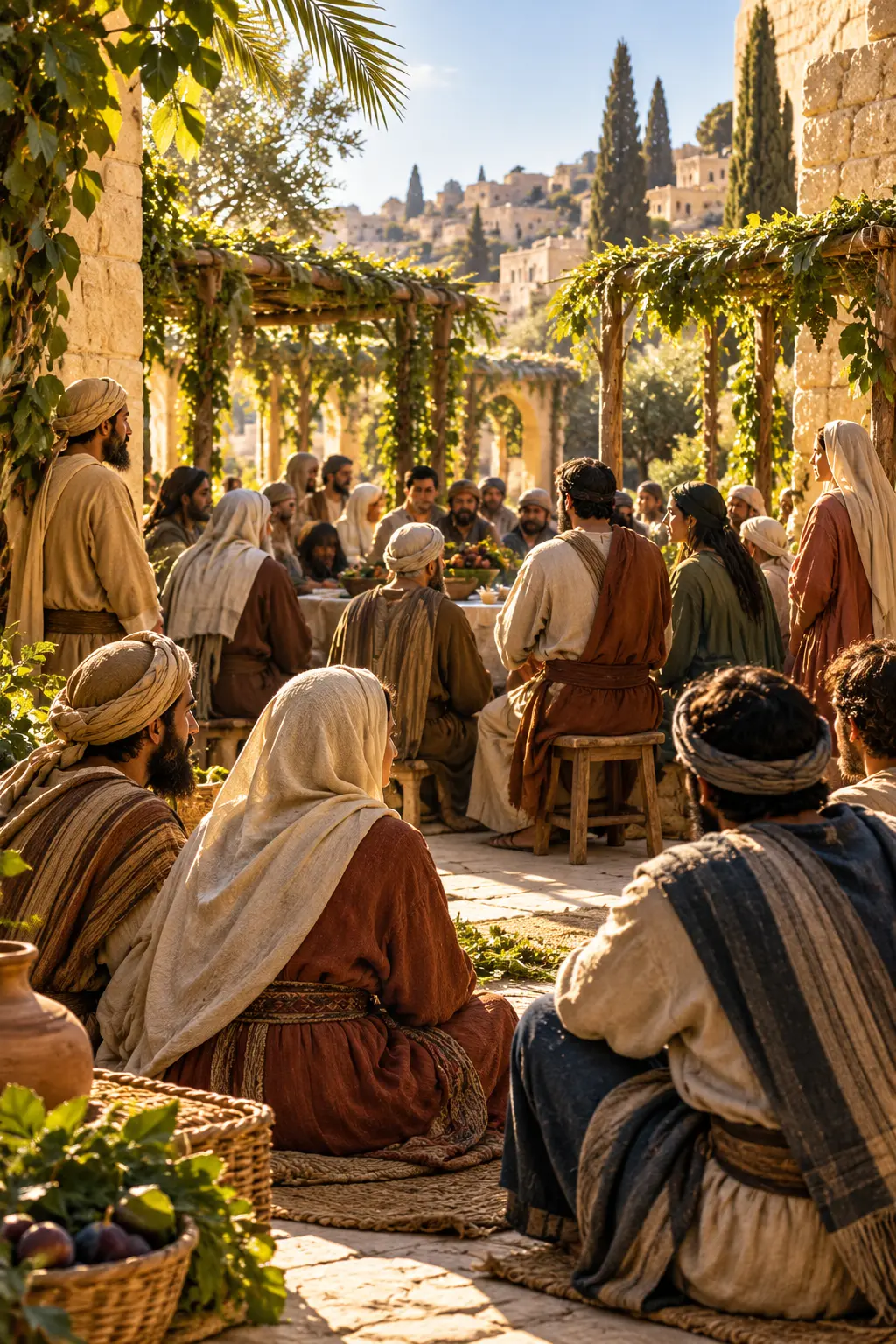 Torah appointmentsEighth Day AssemblyGathering at the festival’s close
 Torah appointmentsSecond PassoverAn appointed opportunity to return
 Historical commemorationsHanukkah / DedicationA sanctuary renewedScroll connectionsFirstfruits of New WineThe vineyard’s first giftScroll connectionsFirstfruits of New OilThe olive harvest rememberedScroll connectionsWood OfferingProvision shared by a community
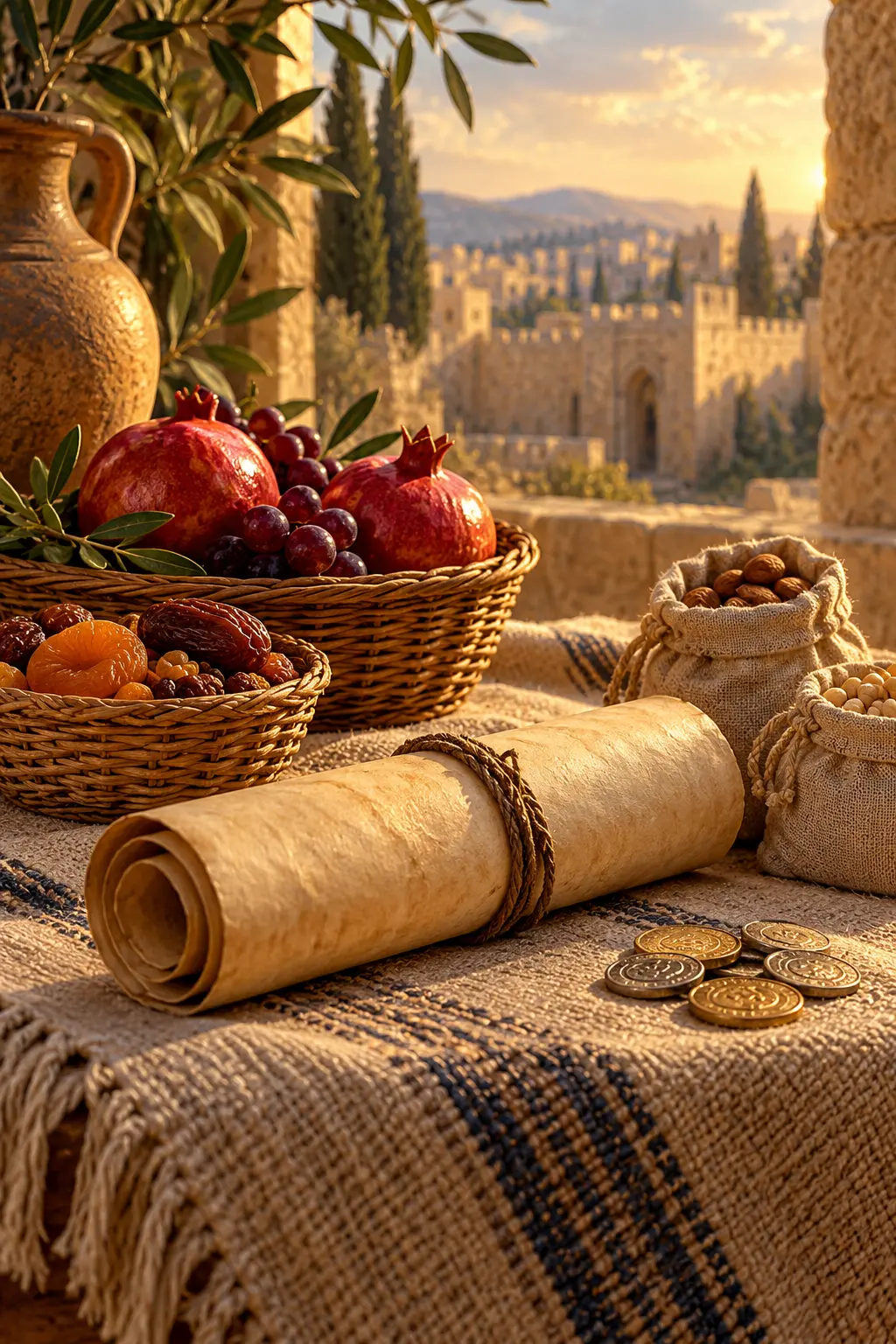 Historical commemorationsPurimRemembrance, gifts and generosity
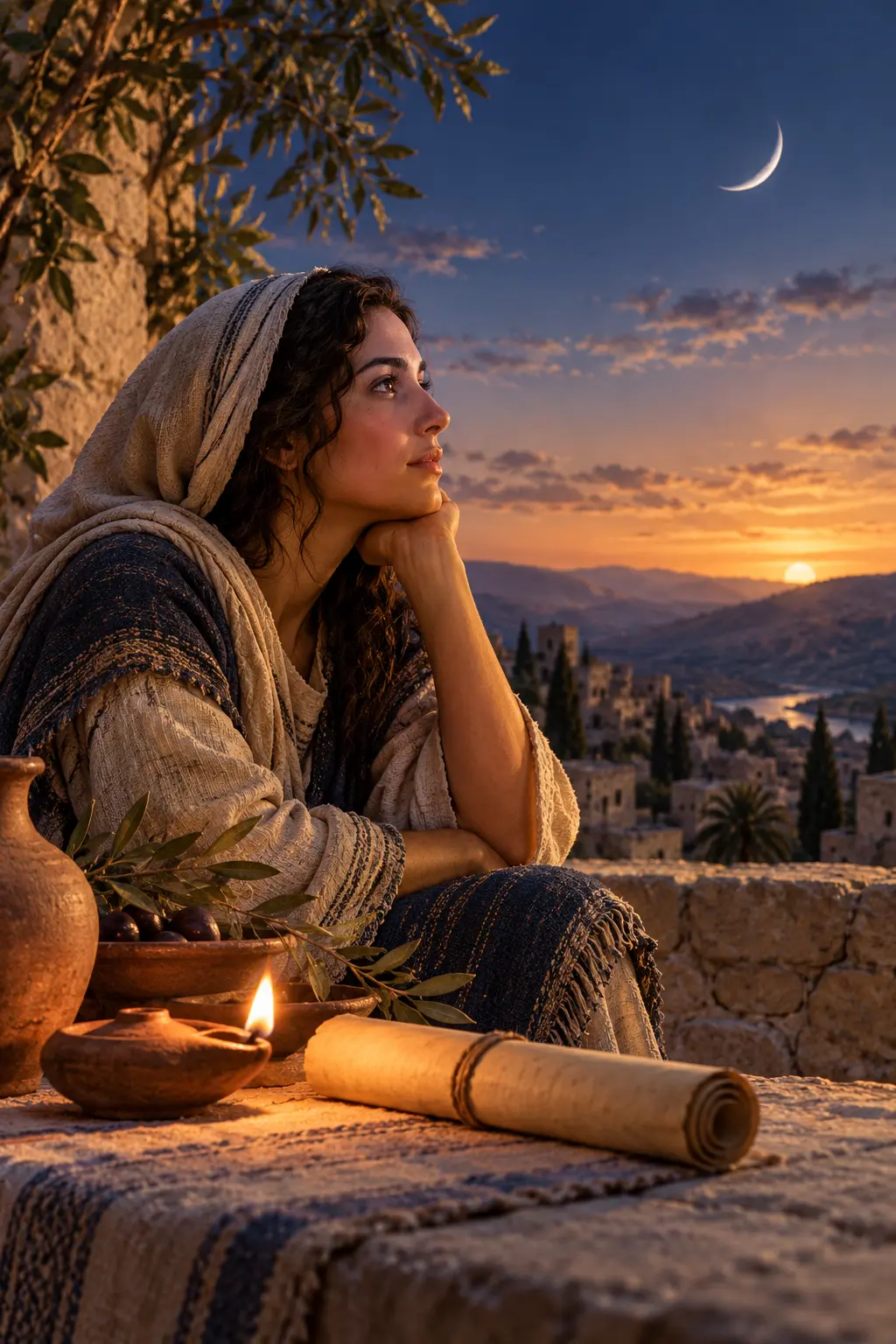 Sacred rhythmsMonth Beginnings / New MoonA rhythm of remembrance
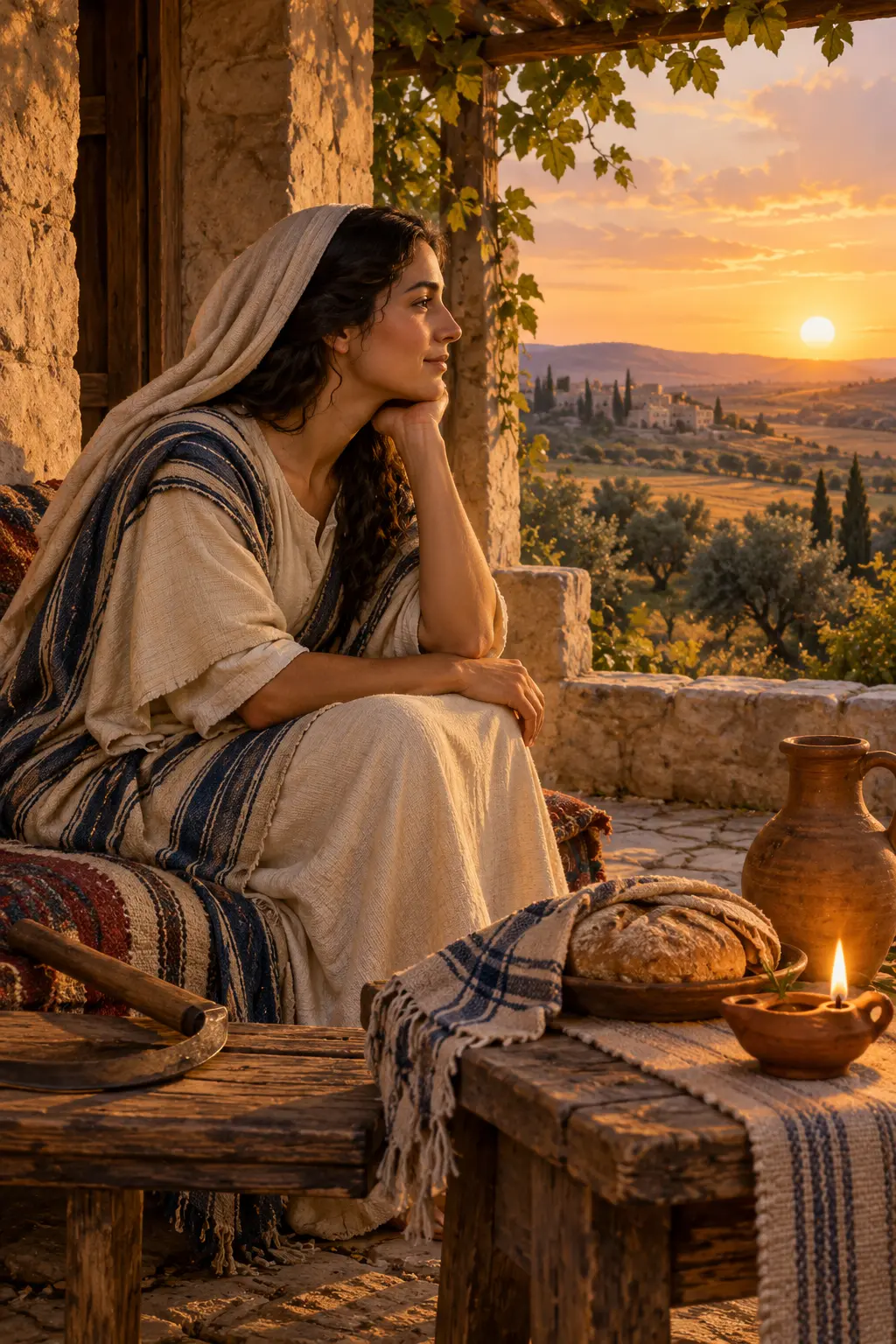 Sacred rhythmsWeekly SabbathA recurring gift of rest
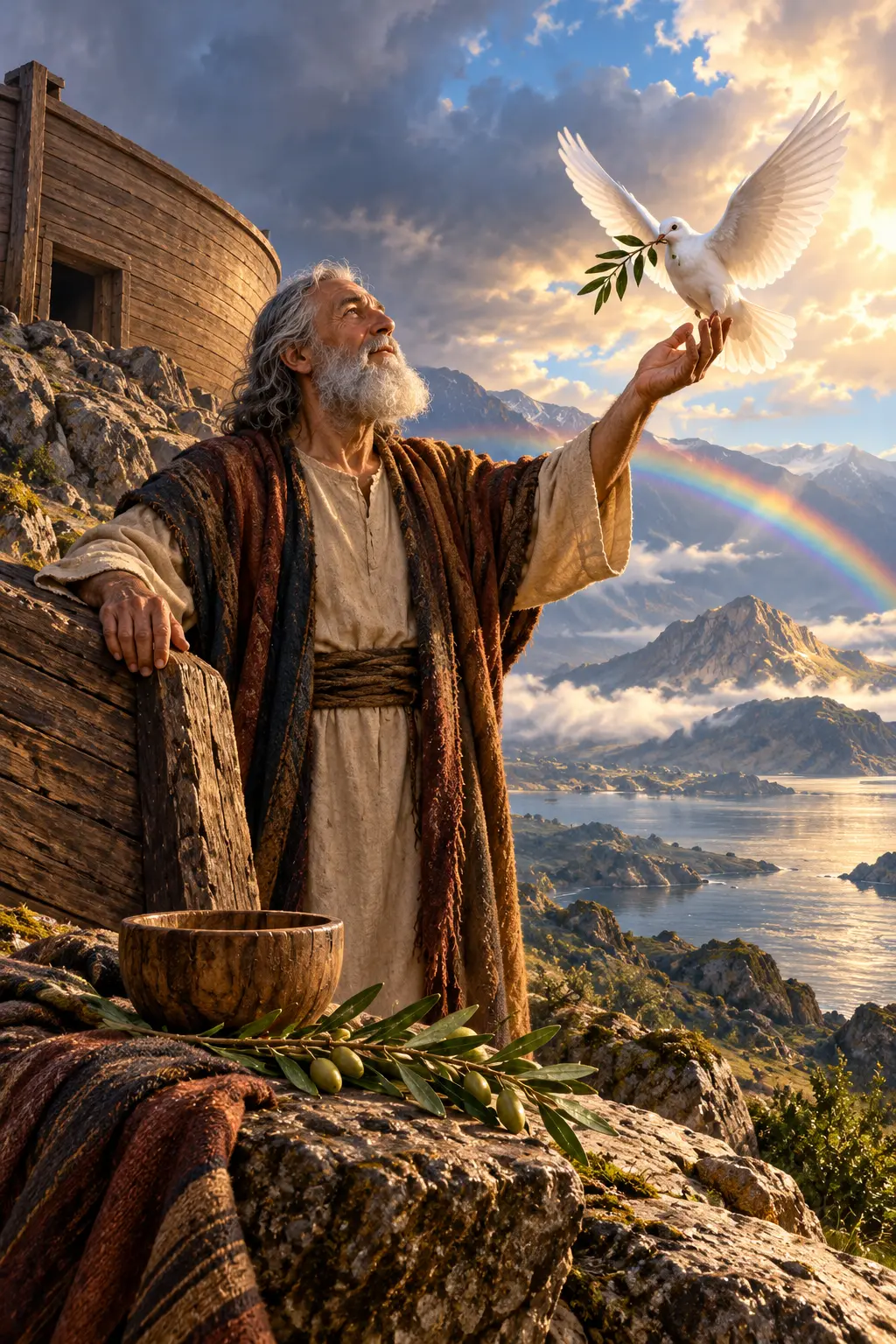 Sacred rhythmsQuarter MemorialsFour turns in the year
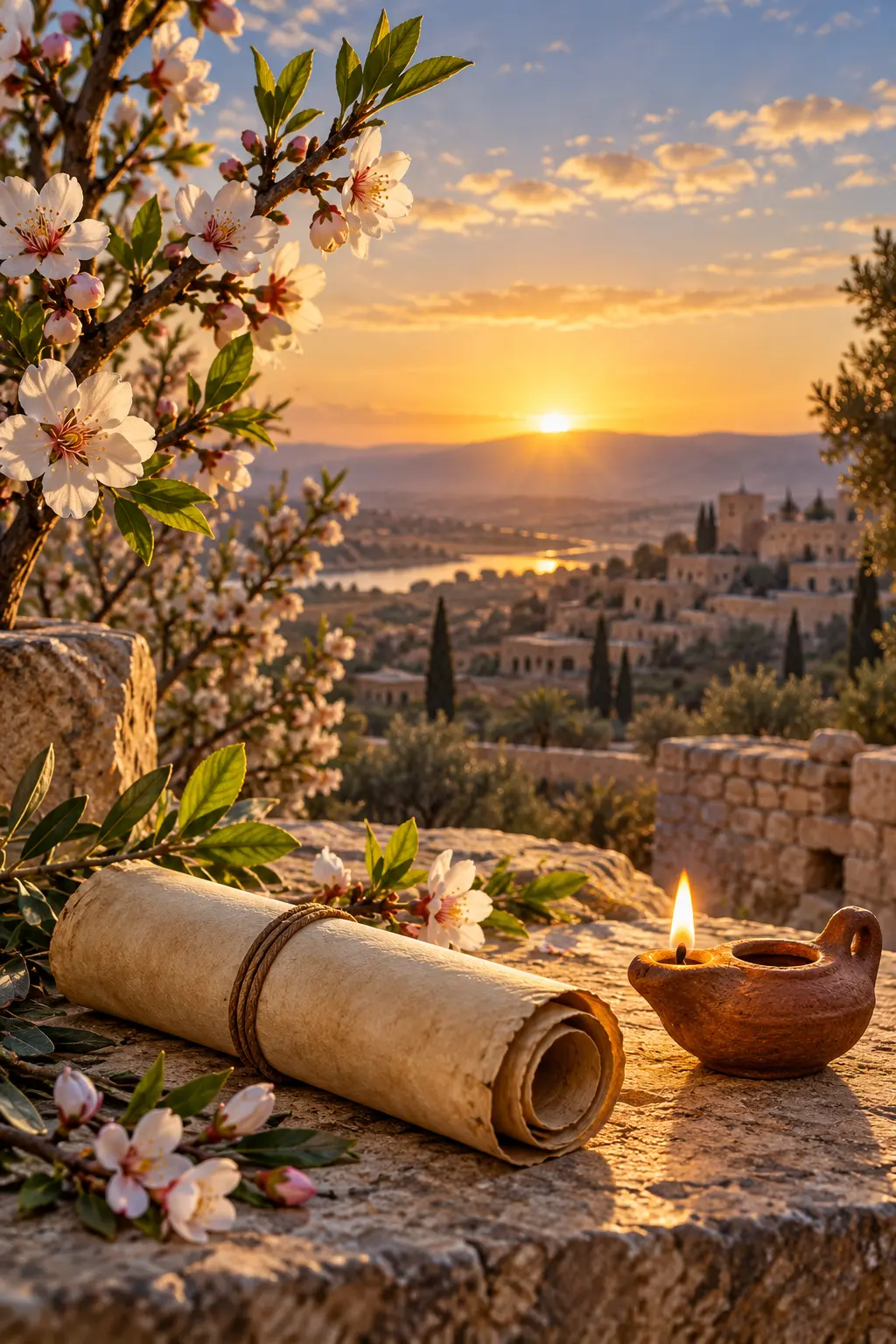 Sacred rhythmsBeginning of the First MonthThe year’s first numbered month
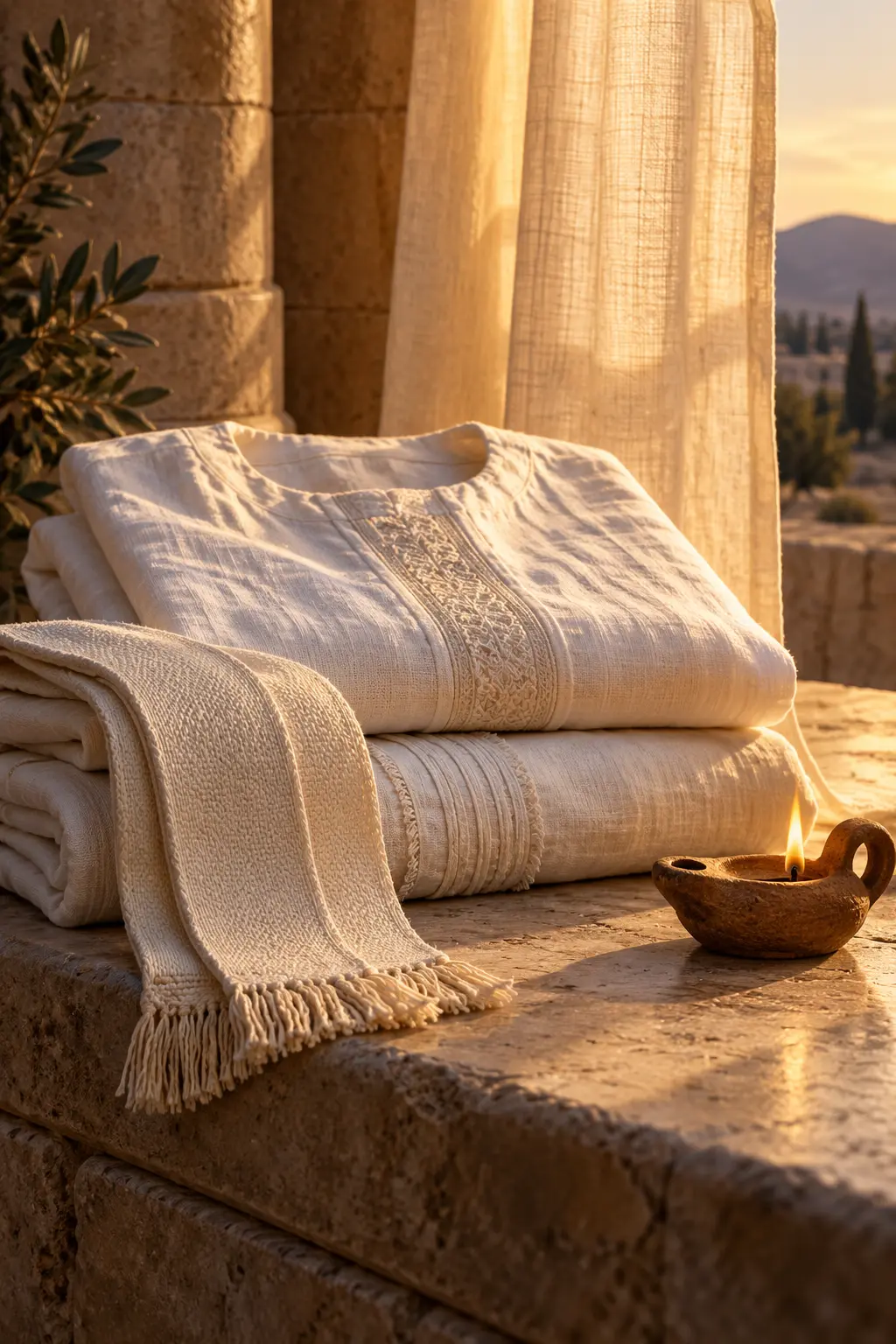 Scroll connectionsPriestly ConsecrationPreparation and an eighth-day beginning
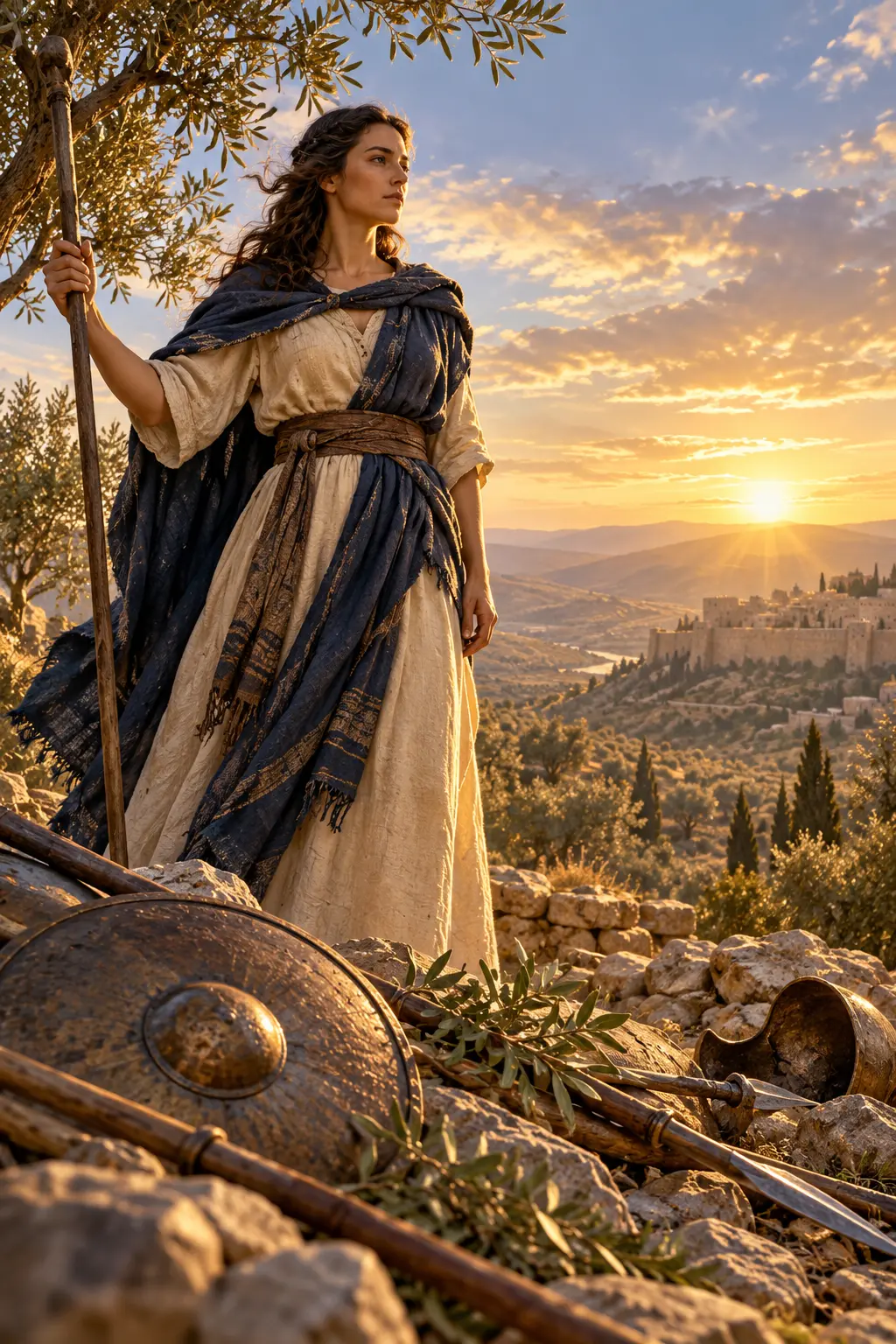 Historical commemorationsNicanor DayA historical remembrance
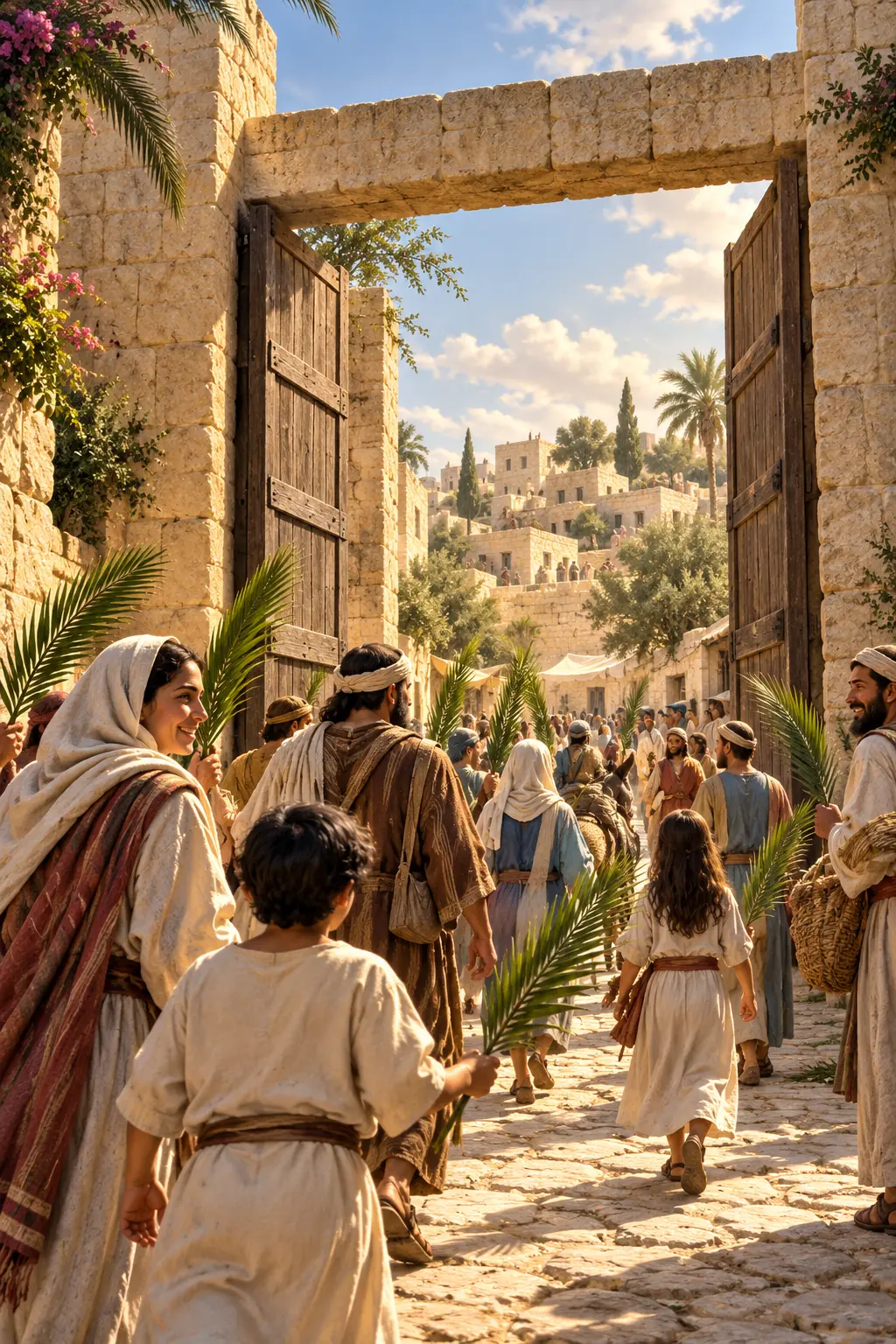 Historical commemorationsAcra Liberation CommemorationThanksgiving at an opened gate
 Cycles of yearsSabbatical YearRest for the land
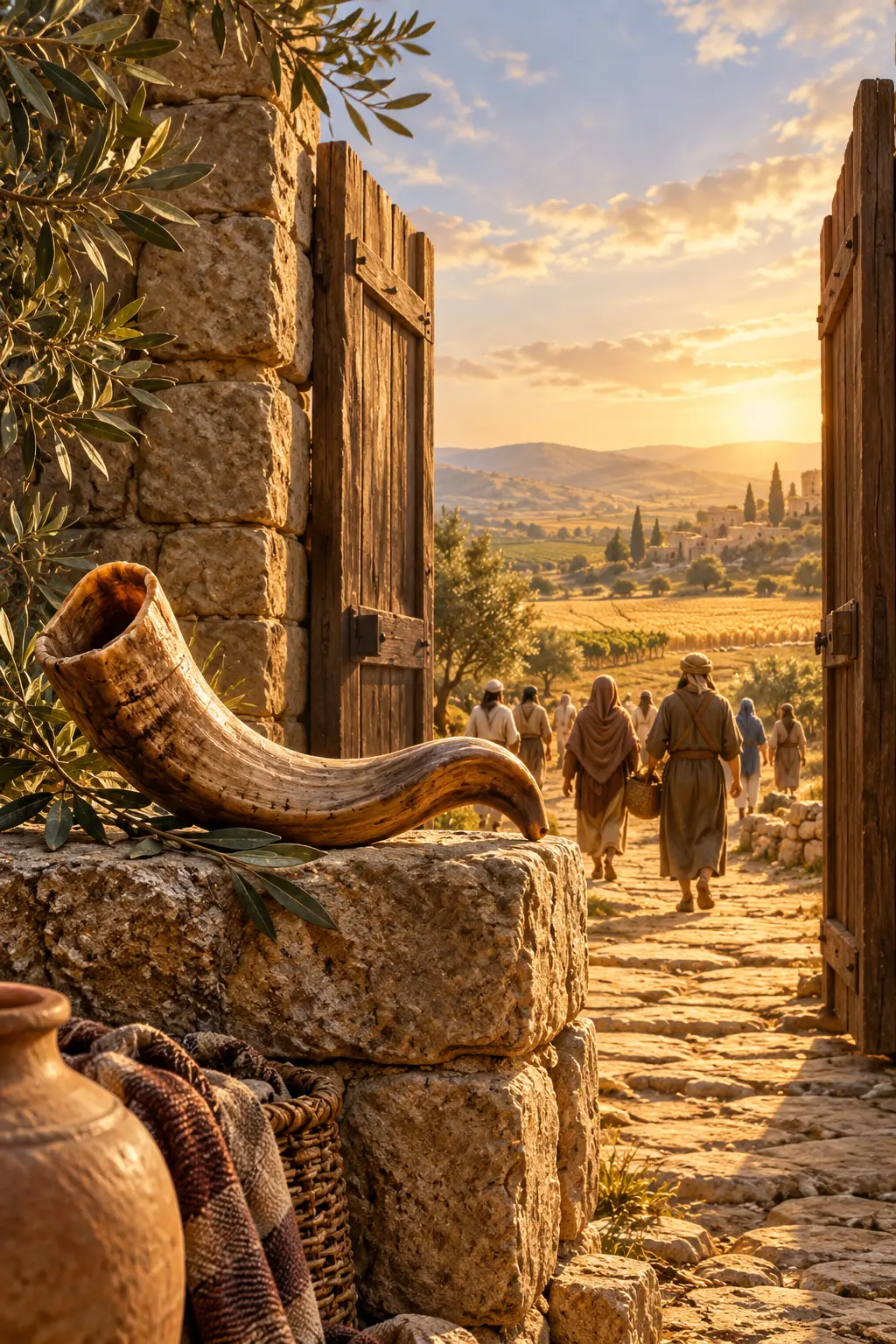 Cycles of yearsJubileeLiberty, return and restoration
23 reviewed feast and sacred-time cards. This is a selected connected collection, not an exhaustive list of every observance in every tradition.
Native calendar registry
Passover
- When?
- Day 14 of the 364-day model
- Scripture / source
- Leviticus 23:5
What does this placement mean?
This entry preserves its registered text, manuscript, seasonal, or reconstruction status. Open Study depth for the model boundary.
Unleavened Bread 1
- When?
- Day 15 of the 364-day model
- Scripture / source
- Leviticus 23:6
What does this placement mean?
This entry preserves its registered text, manuscript, seasonal, or reconstruction status. Open Study depth for the model boundary.
Unleavened Bread 7
- When?
- Day 21 of the 364-day model
- Scripture / source
- Leviticus 23:8
What does this placement mean?
This entry preserves its registered text, manuscript, seasonal, or reconstruction status. Open Study depth for the model boundary.
First Fruits of Barley
- When?
- Day 26 of the 364-day model
- Scripture / source
- Qumran calendar profile
What does this placement mean?
This entry preserves its registered text, manuscript, seasonal, or reconstruction status. Open Study depth for the model boundary.
Pentecost / New Wheat
- When?
- Day 75 of the 364-day model
- Scripture / source
- Leviticus 23; Qumran festival profile
What does this placement mean?
This entry preserves its registered text, manuscript, seasonal, or reconstruction status. Open Study depth for the model boundary.
First Fruits of New Wine
- When?
- Day 124 of the 364-day model
- Scripture / source
- Temple Scroll / 4Q324d
What does this placement mean?
This entry preserves its registered text, manuscript, seasonal, or reconstruction status. Open Study depth for the model boundary.
First Fruits of New Oil
- When?
- Day 173 of the 364-day model
- Scripture / source
- Temple Scroll / 4Q324d
What does this placement mean?
This entry preserves its registered text, manuscript, seasonal, or reconstruction status. Open Study depth for the model boundary.
Trumpets / Day of Remembrance
- When?
- Day 183 of the 364-day model
- Scripture / source
- Leviticus 23:24
What does this placement mean?
This entry preserves its registered text, manuscript, seasonal, or reconstruction status. Open Study depth for the model boundary.
Day of Atonement
- When?
- Day 192 of the 364-day model
- Scripture / source
- Leviticus 23:27
What does this placement mean?
This entry preserves its registered text, manuscript, seasonal, or reconstruction status. Open Study depth for the model boundary.
Tabernacles 1
- When?
- Day 197 of the 364-day model
- Scripture / source
- Leviticus 23:34
What does this placement mean?
This entry preserves its registered text, manuscript, seasonal, or reconstruction status. Open Study depth for the model boundary.
Eighth Day / Great Day
- When?
- Day 204 of the 364-day model
- Scripture / source
- Leviticus 23:36
What does this placement mean?
This entry preserves its registered text, manuscript, seasonal, or reconstruction status. Open Study depth for the model boundary.
Mid-Spring
- When?
- Day 47 of the 364-day model
- Scripture / source
- Season midpoint
What does this placement mean?
This entry preserves its registered text, manuscript, seasonal, or reconstruction status. Open Study depth for the model boundary.
Mid-Summer
- When?
- Day 138 of the 364-day model
- Scripture / source
- Season midpoint
What does this placement mean?
This entry preserves its registered text, manuscript, seasonal, or reconstruction status. Open Study depth for the model boundary.
Mid-Fall
- When?
- Day 229 of the 364-day model
- Scripture / source
- Season midpoint
What does this placement mean?
This entry preserves its registered text, manuscript, seasonal, or reconstruction status. Open Study depth for the model boundary.
Mid-Winter
- When?
- Day 320 of the 364-day model
- Scripture / source
- Season midpoint
What does this placement mean?
This entry preserves its registered text, manuscript, seasonal, or reconstruction status. Open Study depth for the model boundary.